
Common causes of garage door balance problems include worn springs, stretched cables, bent tracks, and changes to the door’s original weight. Each of these issues affects the door differently, but they all lead to the same result: a system that no longer lifts or holds the door evenly.
Precise coordination among the springs, cables, and tracks keeps a garage door properly balanced, and a residential garage door service often restores it once something wears out. This guide breaks down why that coordination breaks down and what typically causes a garage door to fall out of balance over time.
What Happens When a Garage Door Is Unbalanced?
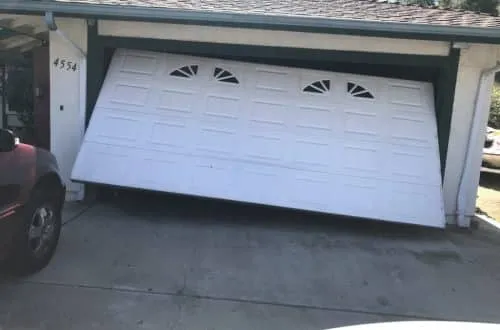
An unbalanced garage door shifts extra load onto the opener, cables, and rollers, since these parts are built for even tension, not to compensate for a door that pulls harder on one side over time.
This imbalance leads to:
- The opener motor works harder to compensate for uneven weight
- Cables and rollers absorb extra strain that shortens their lifespan
- Sudden drops or jerky movements become more likely as the imbalance grows
- Anyone standing nearby faces a greater risk from an unpredictable door
- Small issues left unaddressed tend to grow into larger repairs
To understand these warning signs before a full mechanical failure, read our guide on How to Check Garage Door Balance and When to Call an Expert, which breaks down the full process for testing and confirming balance.
Signs That Point to a Garage Door Balance Problem
A garage door that loses its balance tends to show multiple warning signs at once, and catching them early often means a smaller repair rather than a bigger one.
Homeowners who know what to watch for typically notice these signs first:
- The door drifts or falls instead of holding its position when partially open
- One side of the door sits visibly lower than the other
- The opener strains or makes unusual noise while lifting the door
- The door closes at an angle instead of sitting flat on the ground
- The emergency release cord becomes harder to use because the door will not hold still
To recognize how these symptoms show up in practice, read our guide on What Does an Unbalanced Garage Door Look Like?, which breaks down each visual and mechanical sign in more detail.
Common Causes of Garage Door Balance Problems
Spring Fatigue and Breakage
Torsion and extension springs carry most of a garage door’s weight, and both gradually lose tension after thousands of open-and-close cycles.
Fatigue in these springs tends to show up through:
- Coil damage that starts as small stress points before spreading across the spring
- One side of the door dragging noticeably once the tension weakens unevenly
- Sudden snapping that happens without any visible warning beforehand
- The garage door opener straining harder as it takes on weight that the spring can no longer support
- Visible gaps or stretching appearing along the coil’s length
Spring tension fades in stages, which means the door’s performance often signals a problem well before a total break occurs.
Cable Slippage and Stretching
Lifting cables work alongside the springs to raise and lower a garage door evenly, and both sides depend on matching tension to stay aligned.
Cable wear commonly appears as:
- Fraying strands near the drum or bottom bracket connection
- One side of the door sits visibly lower than the other during operation
- Sudden slipping off the drum during a normal open or close cycle
- Rust or corrosion weakens the cable’s structure over repeated exposure
- Loose tension that changes how evenly the entire door lifts
One weakened cable shifts extra load onto the other side, which is why garage door opener maintenance often flags it early.
Misaligned or Bent Tracks
Metal tracks guide the rollers along a fixed path, and any shift in that path changes how smoothly the door can travel from top to bottom.
Track problems typically involve:
- Bends caused by vehicle impact or accidental contact near the base
- Loosened mounting brackets creating gaps between the track and frame
- Debris buildup adding resistance along the roller’s path
- Rust weakens sections of the track after years of outdoor exposure
- A binding that pulls the door off-center during movement
Track damage tends to worsen with continued use, since a small bend or gap creates resistance that the door must push through with every cycle.
Worn Rollers and Hinges
Rollers and hinges allow a garage door to move smoothly through its tracks after years of repeated motion and daily use.
Wear on these parts often includes:
- Cracked or flattened rollers that lose their original round shape
- Loosened hinge pins that no longer hold panels firmly in place
- Grinding or squeaking sounds appearing during the opening cycle
- Sticking points along the track that interrupt otherwise even travel
- Extra pressure placed on nearby springs and cables as compensation
Worn hardware rarely fails alone, since the extra strain often first shows up as the opener working harder, prompting a garage door opener repair.
Added or Altered Door Weight
A garage door’s spring tension is calibrated during installation to match the door’s exact original weight and material.
Weight changes usually come from:
- Insulation kits installed sometime after the door’s original setup
- Decorative hardware or fixtures attached to the door’s outer surface
- Extra support struts added later for additional reinforcement
- Heavier panel replacements installed during a past repair job
- Accessories mounted directly onto the door that add ongoing weight
The spring tension set for the original weight cannot be adjusted on its own, so any added load immediately shifts the balance.
Improper Spring Size or Installation
Springs replaced with the wrong size or tension create an imbalance starting from the very first use after installation.
Installation errors commonly involve:
- Springs rated for a lighter door than the one actually installed
- Incorrect winding turns applied during the initial setup process
- Mismatched spring pairs used on either side of the same door
- The wrong wire gauge selected for the door’s actual total weight
- Skipped calibration steps during a previous spring replacement
A mismatch between spring and door specifications rarely corrects itself, since the tension remains fixed at the level set during installation.
How to Confirm if a Garage Door Is Unbalanced
Disconnecting the emergency release cord and moving the door partway by hand reveals whether spring tension still holds it steady on its own.
A properly balanced garage door behaves in specific ways during this test:
- Holds steady at the halfway point without drifting up or down
- Moves with light, even resistance throughout the entire lift
- Stays in place at multiple heights instead of just one spot
- Shows no sudden drop the moment it is released mid-lift
- Requires only minimal effort compared to how it felt when new
A door that fails any of these checks is already showing signs of a balance problem, even if the door still opens and closes without obvious trouble.
What to Do After Noticing a Balance Problem
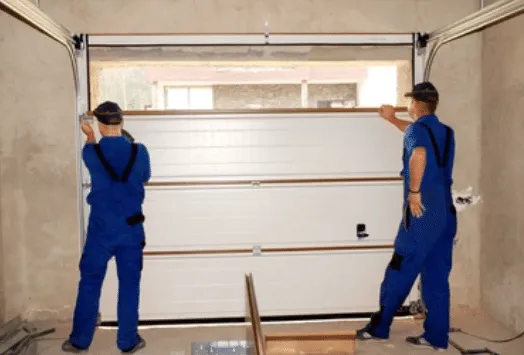
What happens next depends on which part of the system caused the imbalance, since some fixes are minor while others point to a bigger repair.
A garage door balance problem generally calls for one of these responses:
- Scheduling an inspection to identify which component is affected
- Avoiding continued use of the opener until the cause is confirmed
- Noting when the symptoms started and how they have changed
- Checking whether the issue lines up with recent weather or impact
- Treating spring-related symptoms as a priority, given the tension involved
Addressing the problem soon after it appears usually means fewer parts have worn down by the time a technician takes a look.
Should Homeowners Call a Professional for Garage Door Balance Issues?
Visible issues like a bent track are easy to spot without tools, while spring tension and cable problems involve real risk if handled without training.
A professional inspection is generally worth scheduling when:
- A bent or misaligned track is visibly pulling the door off-center
- Spring tension is suspected because the door feels heavy or uneven
- The door has failed a manual balance test at the halfway point
- Cables show fraying, rust, or noticeable looseness near the drum
- Average repair costs need to be confirmed before any work begins
Torsion springs in particular store enough force to cause serious injury, which is why spring-related repairs are rarely a homeowner’s task.
How Professionals Diagnose and Correct Garage Door Balance
A professional door technician runs a full balance test and inspects the springs, cables, tracks, and rollers to identify the cause of the imbalance.
This process usually includes:
- Testing the door manually to confirm how it holds at different heights
- Measuring spring tension against the door’s actual weight
- Checking cables and rollers for wear or misalignment
- Adjusting or replacing the specific component causing the problem
- Confirming the opener runs smoothly once the balance is restored
To walk through what this repair process actually involves, read our guide on How to Fix an Unbalanced Garage Door Safely, which breaks down each step a professional takes to restore proper balance.
Know the Cause Before a Garage Door Balance Problem Gets Worse
A worn spring, a stretched cable, or a bent track each throws off balance in its own distinct way, and identifying which one applies changes what kind of repair actually makes sense for the door. Guessing at the fix without confirming the cause often leads to the wrong part getting replaced while the real issue remains untouched.
TCAMM Door & Gate identifies the exact cause behind garage door balance problems for homeowners throughout Aledo, TX, before recommending any repair or replacement. Contact us or give us a call today, and let our team pinpoint what’s throwing the door off balance so it can be corrected properly.
Frequently Asked Questions
Does the direction a garage door is unbalanced matter?
Yes, the direction of the imbalance often points to which component is affected. A door that drifts downward usually indicates a spring issue, while a door that leans to one side often indicates a garage door adjustment issue involving the tracks or cables.
Can a garage door pass a visual check but still be unbalanced?
Yes, a garage door can look straight and still fail a proper garage door balance test. Visual symptoms do not always match what is happening internally, which is why a hands-on test reveals more than appearance alone.
Is it normal for the garage door balance to change slightly over the years?
Yes, minor shifts in balance are common as components naturally wear down. Understanding how to balance a garage door starts with recognizing that these small changes are part of normal aging rather than a single sudden failure.
Does the number of panels on a garage door affect balance problems?
Yes, doors with more panels distribute weight differently across the springs and tracks. Regular garage door maintenance helps confirm that every panel is still moving in sync with the rest of the system.
What is typically checked during a garage door balance evaluation?
A garage door balance evaluation typically includes the springs, cables, tracks, and rollers. A full garage door inspection also considers how these parts interact rather than examining each one separately.
Can a garage door balance problem affect how the door locks?
Yes, a door that sits unevenly can struggle to align with its lock or latch mechanism. This kind of issue often requires garage door repair rather than a simple adjustment once the misalignment affects the locking hardware.
Does a garage door need to be fully closed to check for balance issues?
No, a balance issue is often noticed when the door is partially open rather than fully closed. Checking the door at different heights during a garage door tune-up gives a clearer picture of how evenly it moves throughout the entire cycle.
Can two garage doors with the same design have different causes of imbalance?
Yes, identical doors can develop balance problems for entirely different reasons. One door may lose balance due to spring fatigue, while another develops the same symptom due to a bent track, which is why garage door safety depends on identifying the actual cause rather than assuming it.
Does the opener need to be recalibrated after a balance problem is fixed?
Sometimes, the opener may need recalibration depending on how significant the imbalance was before the repair. A technician typically checks this as part of the overall correction rather than treating it as a separate step.