
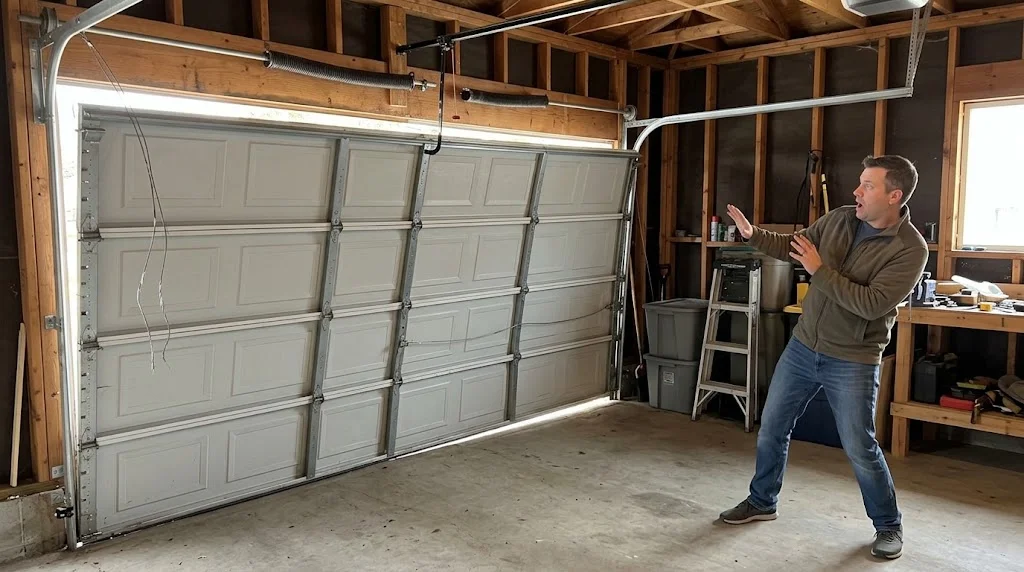
Opening a garage door with a broken spring is never safe, since the door loses the necessary tension that controls its weight. A single-car door weighs 100 to 150 pounds, and a double door can exceed 300 pounds, leaving nothing to stop that weight from dropping once high tension fails without regular maintenance to catch it.
The risks go well beyond a stuck door, ranging from serious injury to complete failure across the garage door system at once. This guide breaks down what happens when a broken torsion spring is ignored, along with why residential garage door maintenance matters before a spring reaches this point.
Key Takeaways
- A broken spring leaves the door’s full weight unsupported during any attempt to open it
- Forcing the opener to lift a heavier garage door risks destroying the motor and gears
- Manual lifting attempts carry a real risk of serious injury to the back and shoulders
- A second spring under extra pressure can fail suddenly and release high-velocity fragments
- Continued use after a broken spring often leads to further damage across the entire structure
- Calling a trained technician immediately is the safest response to a clear sign of failure
Major Safety and Property Risks
A broken spring changes how a garage door behaves entirely, and understanding each specific risk makes clear why the door should stay closed until it’s repaired.
| Risk | What Can Happen | Why It’s Dangerous |
| Door Crashing Down | The door drops suddenly without warning | Creates a crushing hazard for people and vehicles |
| Opener Destruction | Motor and gears strip under raw weight | Opener was never designed to lift unsupported weight |
| Bodily Strain | Back, neck, or shoulder injury during lifting | Manual lifting exceeds safe limits for most people |
| System Failure | Cables, panels, hinges, or tracks give way | Uneven stress spreads damage across multiple parts |
| Second Spring Failure | The remaining spring snaps under overload | Releases metal fragments at high velocity |
The Door Can Crash Down Rapidly
A garage door with a broken spring can drop without warning, since nothing remains to counterbalance the door’s weight during the fall.
This risk plays out through these specific dangers:
- A single-car door weighing 100 to 150 pounds can drop in a fraction of a second
- Double doors exceeding 300 pounds create an even greater crushing hazard
- A loud bang often signals the exact moment tension releases across the entire structure
- A falling door can crush a vehicle parked directly beneath it
- The drop happens with almost no warning once the spring reaches sudden failure
To avoid the crash risk entirely, read our guide on How Often Should Garage Door Springs Be Replaced?, which explains how staying ahead of an average garage door spring’s expected timeline keeps a door from ever reaching this point.
Destruction of the Automatic Garage Door Opener
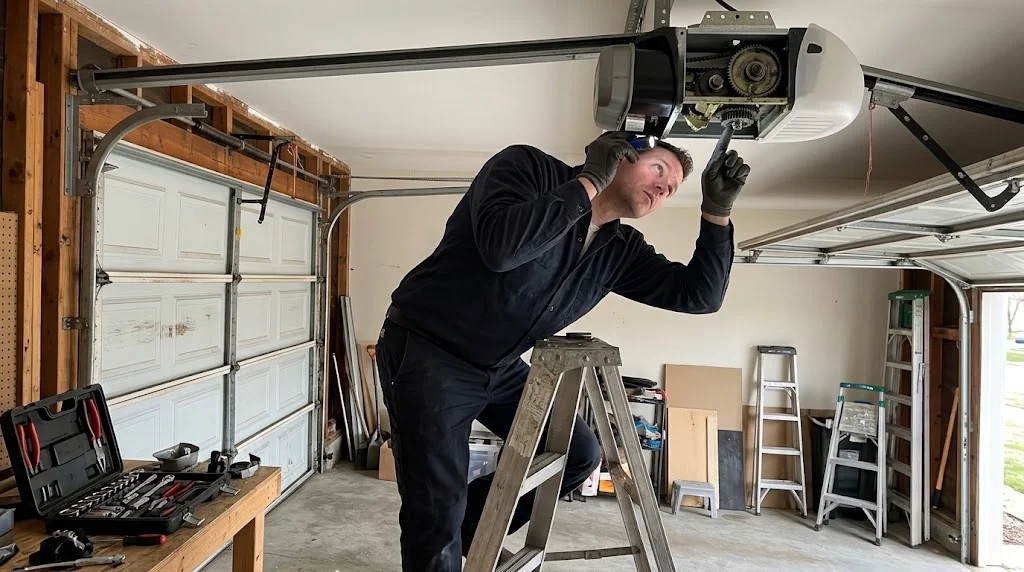
An automatic garage door opener is built to guide a balanced door, not to lift the door’s full weight on its own.
Forcing the opener to work without spring support creates these specific risks:
- Internal gears strip quickly under the added load
- Drive chains and belts break or strip from the sudden extra pressure
- The motor can burn out completely within a single attempt
- Repeated attempts multiply the damage across multiple opener components
- A malfunctioning door opener afterward often needs full replacement, not just repair
Garage door opener repair becomes more likely and costlier once an opener lifts an unsupported door, especially with prior lack of lubrication.
Severe Bodily Strains
Manually lifting a garage door without a working spring places enormous physical demand on a single person’s body.
This risk carries these specific dangers:
- Heavy lifting without spring support strains the back significantly
- Weak springs already struggling under high temperatures make lifting even riskier
- The door’s full weight offers no gradual resistance the way proper tension normally provides
- Attempting this alone increases the lack of control over the door mid-lift
- Recovery from a lifting injury can take weeks longer than a simple garage door spring replacement
Broken garage door spring repair removes the need for anyone to attempt this kind of manual lift in the first place.
Complete System Failure
Operating a garage door with a broken spring puts extreme, uneven stress on every remaining part of the entire system.
This risk tends to show up through these specific failures:
- Steel lift cables can snap under the sudden uneven load
- Door panels can warp from the stress of an unsupported lift
- Garage springs showing signs of rust beforehand often fail during exactly this kind of strain
- Tracks can bend, causing rollers to pop out of alignment entirely
- Damage often spreads to different sections of the door within a single attempt
To recognize these same warning signs before a full system failure happens, read our guide on What Are the Signs a Garage Door Spring Needs to Be Replaced?, which walks through the early clues that precede this level of damage.
Sudden Failure of the Second Spring
A garage door with two torsion springs puts the full load on the remaining spring the moment one of them breaks.
This risk creates these specific dangers:
- The second spring carries a massive, dangerous overload on its own
- The way torsion springs twist under sudden overload increases the odds of a second break
- High-velocity metal fragments can release if a failing extension spring snaps during use
- Fragments moving at that speed can cause severe lacerations or facial injuries
- Eye injuries from flying fragments can result in permanent damage
To trace exactly what pushes a second spring toward this kind of overload failure, read our guide on What Causes Garage Door Springs to Fail?, which breaks down how one break accelerates premature wear on the spring still holding on.
What to Do Immediately After a Spring Breaks
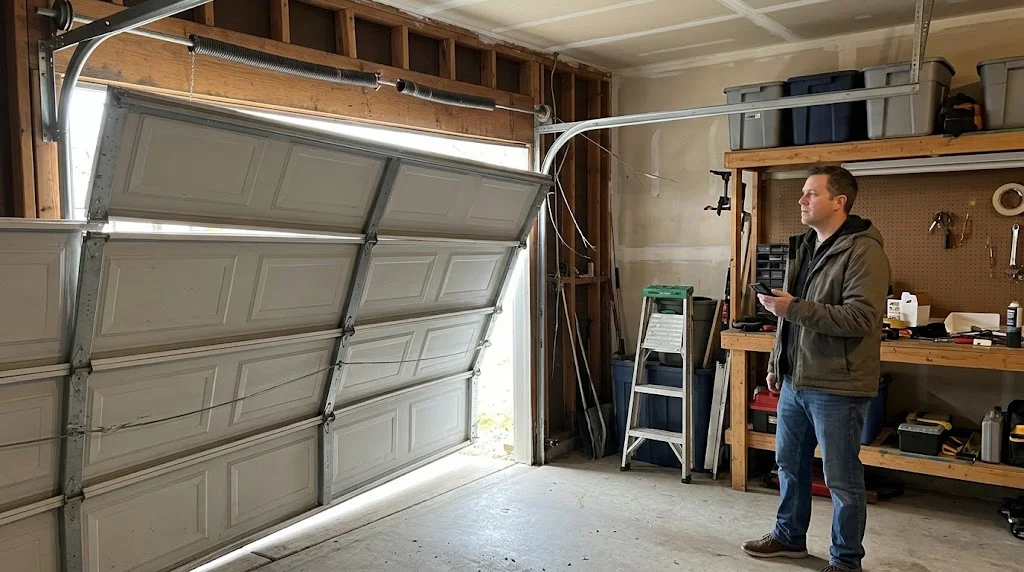
A broken spring calls for a specific, careful response, not an attempt to force the door open or work around the damage.
Follow these steps right away after noticing a broken spring:
- Stop using the garage door immediately, whether by hand or with the opener
- Keep people and vehicles clear of the door until it’s fully inspected
- Avoid disconnecting the opener manually unless already trained to do so safely
- Note whether one or both garage springs appear affected before calling for help
- Contact a trained technician rather than attempting any DIY fix
Long garage door springs held to proper maintenance rarely reach this point, and garage door torsion spring repair should happen as soon as possible once one breaks.
A Broken Spring Is Never Worth the Risk of Waiting
A broken garage door spring turns a routine repair into a genuine safety hazard within seconds of any attempt to use the door. Every one of these risks connects back to the lifespan of garage door springs, since most failures happen once a spring has already reached the end of their lifespan.
TCAMM Door & Gate responds quickly to broken spring calls from homeowners across Aledo, TX, and the surrounding area, day or night. Contact us or give us a call today, and our trained technicians will secure the door safely and handle the repair without putting anyone at further risk.
Frequently Asked Questions
Will my garage door opener still work if a spring breaks?
The opener may still run, but forcing it to lift the door without spring support quickly damages the motor and internal gears. One of our most common calls involves an opener that burned out after just one or two forced attempts.
How dangerous is a broken garage door spring really?
A broken spring creates several serious safety risks at once, from a sudden crash to flying metal fragments if a second spring fails. In our experience, the danger is often underestimated until someone notices unusual noises or signs of wear that came before it.
What happens if only one of my two springs breaks?
The remaining spring on that side of the door takes on a massive, dangerous overload the moment the first one fails, putting it at much higher risk of snapping too. Our rule of thumb from the field is to treat both springs as compromised once either one breaks.
Can a broken spring damage other parts of my garage door?
Yes, continued use after a break can snap cables, warp panels, crack hinges, and bend tracks as the system absorbs uneven stress. This kind of damage often costs far more to repair than the original extension springs or torsion springs would have.
How can I tell if my spring simply reached the end of its lifespan?
A spring nearing the end of its lifespan can fail without much extra strain, since less tension builds up gradually as the coil weakens with age. Our team checks the lifespan of your spring and the lifespan of the garage door springs overall during every inspection.
Does weather make a broken spring more dangerous?
Yes, extreme temperatures, high humidity, and frequent rain all affect how a damaged spring behaves under load over the long term. This is an important factor our door company builds into every home security and safety assessment.
Should I try to disconnect the opener myself after a spring breaks?
Disconnecting the opener without proper tools or training adds its own risk, since the door's weight is already unsupported at that point. In our experience, it's safer to leave the door exactly as it is and wait for a trained technician.
How quickly does a broken spring need professional attention?
A broken spring needs immediate attention, ideally the same day it's noticed, since every additional use adds a lot of stress to the rest of the system. Our rule of thumb from the field is to treat a broken spring as an urgent repair rather than a routine one.
Is it expensive to fix a broken spring after this kind of damage?
Yes, ignoring a broken spring for too long usually adds extra expense once excessive pressure has spread damage to other parts. Environmental conditions like humidity, along with the types of garage door springs installed, can make repairs costlier the longer they're delayed.