
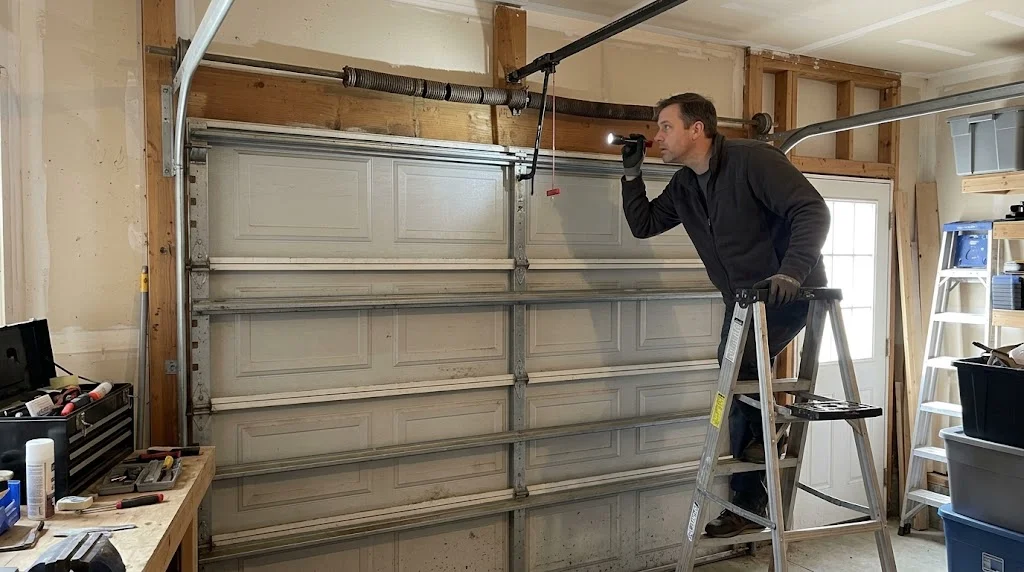
A garage door spring shows clear warning signs before it fails, including visible gaps in the coil, a loud bang, rust, and a door that suddenly feels far heavier to lift. Recognizing these signs early keeps a small issue from turning into a sudden failure that leaves the garage door system unusable.
These eight signs range from obvious, like a loud bang, to subtle, like a slight gap forming quietly in the coil over several weeks. A quick call for residential garage door maintenance at the first sign often costs far less in the long run than waiting for a complete failure, especially once tension starts dropping.
Key Takeaways
- A visible gap in the coil is one of the clearest signs of a failing spring
- A loud bang usually means a spring has already snapped under high tension
- Rust and corrosion make a torsion spring brittle and prone to sudden failure
- A door that feels unusually heavy often means the spring can no longer support the door’s weight
- Loose cables and crooked movement both point to uneven or lost tension
- Ignoring these warning signs increases the risk of further damage to the entire system
Common Signs a Garage Door Spring Is Failing
A garage door spring rarely fails without offering some warning first, and knowing what to look for makes it much easier to catch a problem early.
| Sign | What It Looks or Sounds Like | What It Usually Means |
| Visible Gaps | A clear space or break in the coil | The spring has physically separated |
| Loud Bang | A sudden noise like a firecracker | The spring has snapped under tension |
| Rust and Corrosion | Reddish-brown buildup on the metal | The coil has weakened and turned brittle |
| Loose Cables | Slack or hanging cables | Tension has been lost from a broken spring |
| Heavy or Stuck Door | Opener struggles or door won’t lift | The spring can no longer support the door’s weight |
| Sliding Down | Door won’t stay open halfway | Tension has dropped below what’s needed |
| Crooked Movement | One side rises faster than the other | Uneven tension between the two springs |
| Reached Lifespan | Spring has passed roughly 10,000 cycles | Age alone increases the odds of failure |
Visible Gaps
A visible gap in the coil is one of the clearest signs of wear a torsion spring can show, since it means the metal has already begun to separate.
Look for these specific signs of a gap forming:
- A clear space appears between coils that once sat tightly together
- The gap widens near the center of the spring more than the ends
- Metal edges near the gap look jagged rather than smoothly wound
- The gap becomes more visible after the door completes a full cycle
- A gap paired with rust across different sections of the door suggests the spring is close to complete failure
To gauge how this sign fits into the bigger picture of replacement timing, read our guide on How Often Should Garage Door Springs Be Replaced?, which lays out the full lifespan expectations for both spring types.
Loud Bang
A loud bang from the garage is one of the most unmistakable signs that a spring has already failed, since the sound only happens when tension releases suddenly.
These details usually accompany a loud bang:
- The sound resembles a firecracker or gunshot rather than a dull thud
- The bang happens without any obvious impact or outside cause
- The door becomes noticeably harder to open right after the sound
- One side of the door may hang lower immediately following the bang
- The bang is often followed by visible slack in the cables
Broken garage door spring repair should happen quickly after a bang like this, since the door is no longer safe to operate normally.
Rust and Corrosion
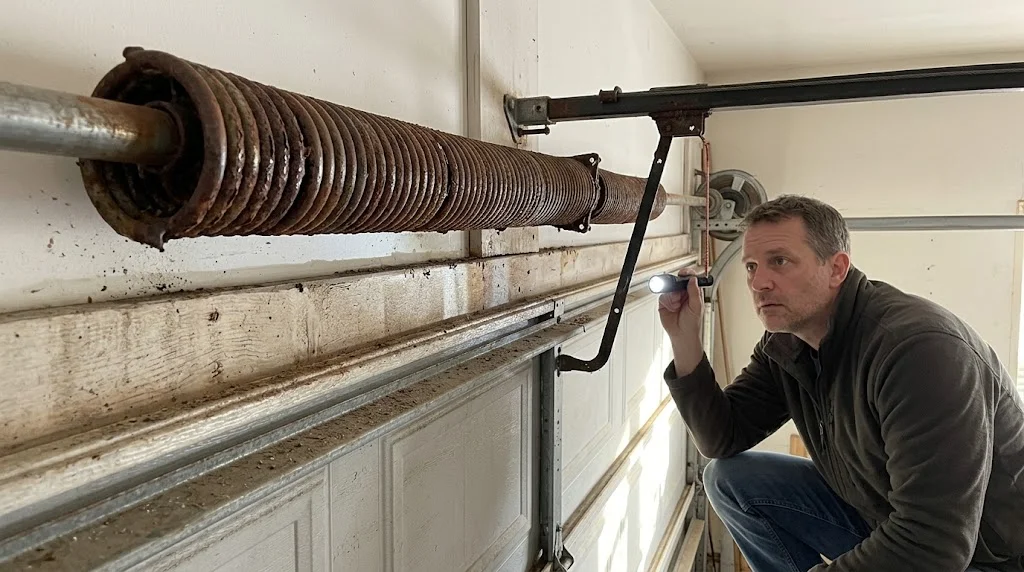
Rust and corrosion signal that moisture has weakened the coil over time, especially under high humidity and extreme temperatures.
These are the clearest signs of rust that have taken hold:
- Reddish-brown buildup coats sections of the coil unevenly
- The metal surface looks flaky or pitted instead of smooth
- Coils near the ends show more buildup than the center
- The spring looks duller in color compared to a healthy coil
- Surface rust spreads noticeably between seasonal inspections
A rusted spring loses necessary tension gradually, making regular maintenance one of the best ways to catch this sign early.
Loose Cables
Loose or hanging cables are a less obvious sign of spring trouble, but they point directly to lost tension somewhere in the system.
Watch for these specific cable-related signs:
- Visible slack appears in the cable even when the door is closed
- The cable hangs away from the track instead of sitting flush
- One cable looks looser than the other on the opposite side of the door
- The cable moves independently of the drum during a cycle
- Slack increases noticeably after a loud bang or sudden failure
To recognize how uneven tension like this connects to safety, read our guide on Is It Safe to Open a Garage Door With a Broken Spring?, which explains exactly when loose cables signal a real hazard.
Heavy or Stuck Door
A door that suddenly feels heavy or gets stuck partway through a cycle is a strong sign the spring can no longer manage the door’s weight.
These signs usually show up together:
- The opener strains audibly and moves the door only a few inches
- Manual lifting requires far more effort than it used to
- The door stops moving before reaching the fully open position
- The opener reverses unexpectedly instead of completing the cycle
- A heavier garage door struggles more noticeably than a lighter one
Garage door opener repair is sometimes recommended here, though the opener itself often isn’t the true source of the strain.
Sliding Down
A manual door that slides down or slams shut on its own is showing a clear sign that the spring has lost most of its holding tension.
Look for these specific sliding-related signs:
- The door will not stay open halfway without being propped
- Letting go of the door causes it to drop faster than expected
- The drop happens more suddenly than a slow, gentle descent
- The door feels like it is fighting gravity rather than balancing against it
- Sliding gets worse the longer the spring goes unaddressed
Garage door torsion spring repair is typically needed once a door starts sliding this way, since the spring is no longer holding necessary tension.
Crooked Movement
Crooked or uneven movement during a cycle is a visible sign that tension has become unbalanced between the two springs.
These signs point to uneven tension:
- One side of the door visibly rises faster than the other
- The door appears tilted at some point during the cycle
- Panels flex slightly out of alignment as the door moves
- The imbalance becomes more obvious the higher the door rises
- Crooked movement often worsens gradually over several weeks
To find out what this kind of imbalance can lead to if left unaddressed, read our guide on What Causes Garage Door Springs to Fail?, which explains how uneven tension accelerates premature wear.
Reached Lifespan
A spring that has simply reached the end of its expected lifespan may show few dramatic signs at all, aside from its age and cycle count.
Watch for these age-related signs specifically:
- The spring has been in service for roughly 7 to 10 years or more
- Cycle count estimates suggest the spring is near or past 10,000 uses
- The spring shows general wear without one single dramatic symptom
- Small signs like stiffness or slower movement appear gradually
- No maintenance records exist showing the spring was ever replaced
Reaching this stage alone justifies a closer inspection, even without a single obvious sign of visible damage or unusual noise.
Steps to Take Before Calling for Professional Repair
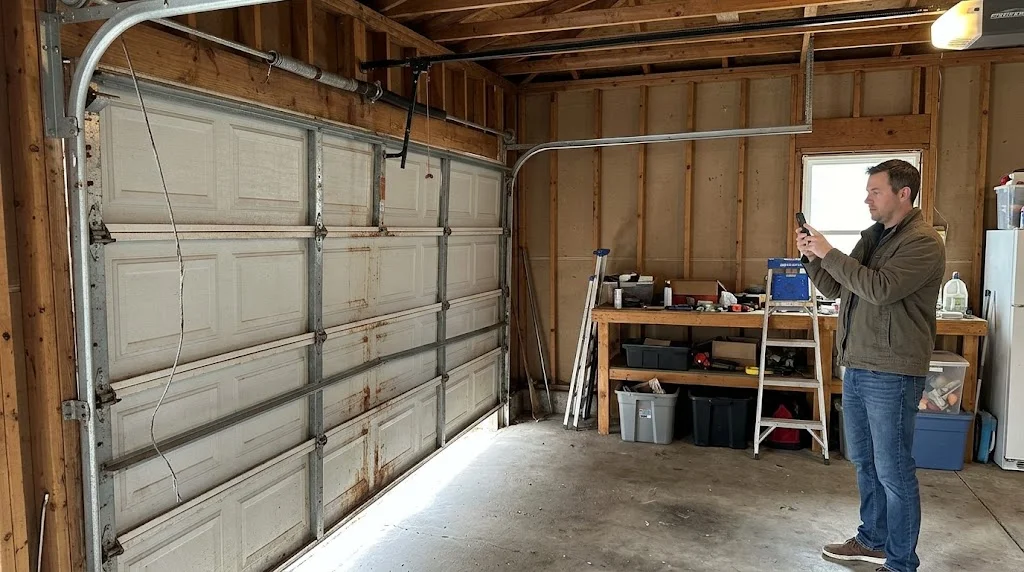
Once one or more of these signs show up, a few careful steps help confirm the problem without creating new safety risks.
Follow these steps before scheduling a repair visit:
- Avoid using the garage door manually or with the opener if a bang was heard
- Take note of which signs are present, since this helps a technician diagnose faster
- Check whether the issue affects one side of the door or both evenly
- Keep people and vehicles clear of the door until it’s inspected
- Schedule an inspection promptly rather than waiting for a full failure
Following these steps early on helps keep a manageable issue from developing into a full spring failure before an inspection happens.
Recognizing These Signs Keeps a Spring Problem Manageable
Recognizing a spring’s warning signs takes only a few minutes of attention, yet it often makes the real difference between a routine repair and an unexpected, costly breakdown that catches a household off guard. A sign like a loud bang or a visible gap rarely appears without some warning building up beforehand.
TCAMM Door & Gate helps homeowners across Aledo, TX, and nearby areas catch these signs early with fast, reliable spring inspections. Contact us or give us a call today, and let our trained technicians confirm what’s really going on before a small sign turns into a bigger problem.
Frequently Asked Questions
Can a garage door spring show signs of wear without breaking completely?
Yes, signs of wear like rust, small gaps, or a torsion spring's twist often appear well before a broken spring fully fails. Catching these warning signs early, often tied to a lack of lubrication, prevents the sudden failure that needs immediate attention later.
Is a crooked garage door always a spring problem?
Crooked movement often points to uneven tension between the two springs, though a bent track can sometimes cause a similar look. We typically check both springs first using proper tools, since that's a more important factor than the track itself.
What does a loose cable mean for my garage door?
A loose or hanging cable usually means the spring on that side of the door has less tension than it should. This clear sign often shows up right after a loud bang, adding extra pressure and excessive pressure on the entire structure.
How can I tell if my spring has reached the end of its lifespan?
A spring nearing the end of its lifespan, or roughly 10,000 cycles, is worth inspecting even without dramatic symptoms. Our door company recommends checking the lifespan of garage door springs once it passes that general age range.
Should I worry about small amounts of rust on my garage door spring?
Yes, even light rust can weaken long garage door springs over time, especially under high temperatures or certain environmental conditions. Frequent rain speeds up how quickly rust spreads and creates a genuine safety hazard.
Why does my garage door feel heavier than it used to?
A heavier-feeling door usually means the average garage door spring can no longer fully support the weight of the door during lifting. This symptom traces back to a failing extension spring nearing the end of their lifespan more often than homeowners expect.
Can I check for these signs myself without special tools?
Checking visually is fine, but heavy lifting or attempting a repair alone risks serious injury and a lack of control over the door panels. This answer is offered for general informational purposes rather than as a repair guide.
Is it safe to keep using the garage door if I notice one of these signs?
Continued use depends on the specific sign, though a loud bang or a door that won’t stay open at a gentle descent should stop use immediately. Delaying a garage door spring replacement only adds to the lifespan of the garage door springs shrinking further and to overall home security risk.
How quickly should I act once I notice one of these signs?
Responding within a few days helps prevent a lot of stress and a bigger repair over the long term. Garage springs showing multiple signs, sometimes flagged through electronic messages from a smart opener, tend to fail sooner than a single isolated symptom would suggest.