
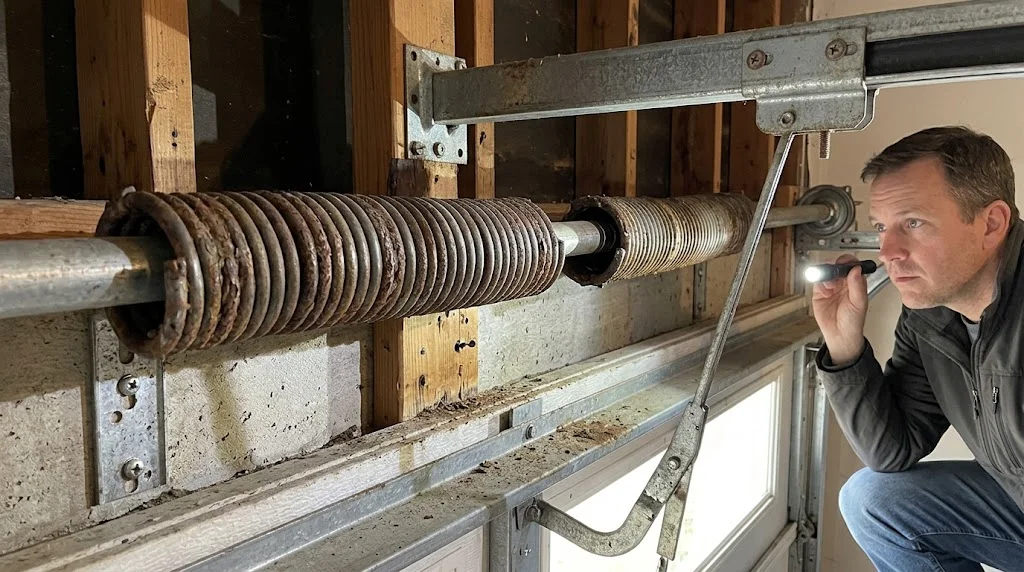
Garage door springs fail most often from heavy daily use, a lack of lubrication, extreme temperatures, the wrong spring size, and signs of rust building up on the coil over time. Each of these causes adds extra strain to the torsion springs until the coil can no longer hold the necessary tension needed to manage the door’s weight.
Pinpointing the exact cause matters just as much as noticing that a garage door spring has failed at all. This guide breaks down the five most common causes behind sudden failure, alongside a few tips on garage door opener maintenance that protects the rest of the garage door system too.
Key Takeaways
- Heavy daily use adds cumulative strain that shortens a spring’s lifespan of garage door springs
- A lack of lubrication increases friction and speeds up premature wear
- Extreme temperatures and high humidity both accelerate wear on the coil
- The wrong spring size creates less tension than a door’s weight actually needs
- Signs of rust and corrosion make a torsion spring brittle and prone to sudden failure
- Preventing these causes early protects the entire system from further damage
Common Causes of Garage Door Spring Failure
A garage spring rarely fails for just one reason, and knowing which cause applies helps set realistic expectations for how long a replacement will actually last.
| Cause | How It Happens | Effect on the Spring |
| Heavy Use | Frequent cycles add wear with each open and close | Shortens the spring’s overall lifespan |
| Lack of Lubrication | Dry coils create friction between the metal | Speeds up premature wear |
| Extreme Temperatures | Metal expands and contracts repeatedly | Weakens the coil over time |
| Wrong Spring Size | Incorrect tension puts uneven stress on the door | Increases the risk of sudden failure |
| Rust and Corrosion | Moisture builds up on exposed metal | Makes the coil brittle and weak |
Heavy Use and Cycle Count
Heavy daily use adds a small amount of stress to a torsion spring with every single cycle, and that stress accumulates faster than homeowners typically realize.
Cycle-related wear tends to show up through these factors:
- Multiple daily cycles from frequent use add strain more quickly over time
- Heavier garage doors place extra strain on the spring with each cycle
- Commercial-style heavy use shortens long garage door springs significantly
- An imbalanced door forces the spring to compensate for uneven weight across different sections of the door
- A malfunctioning garage door opener sometimes adds extra cycles the spring was never rated for
To map out how this cause connects to the bigger replacement timeline, read our guide on How Often Should Garage Door Springs Be Replaced?, which lays out realistic lifespan expectations based on cycle count and average garage door spring ratings.
Lack of Lubrication
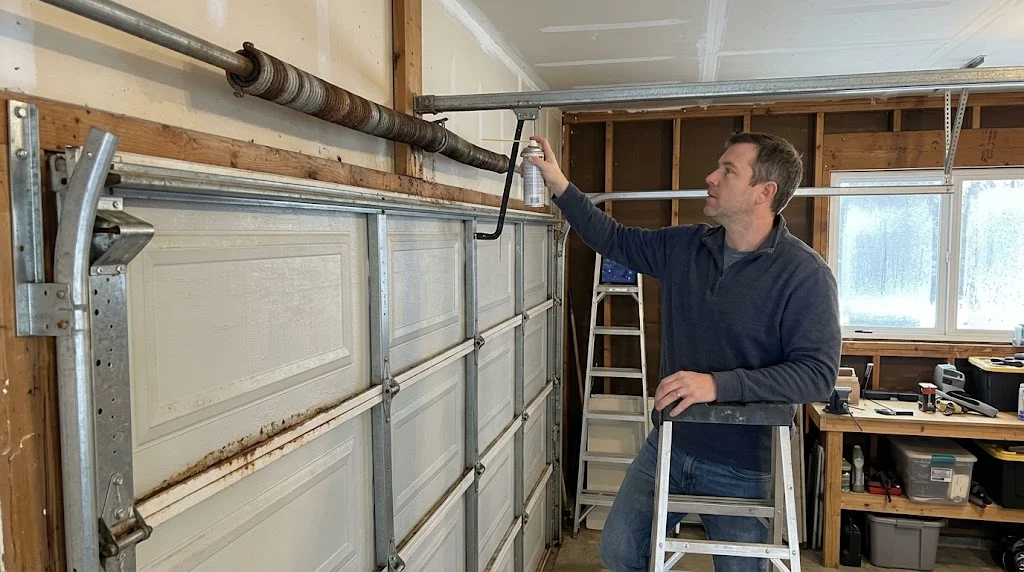
A lack of lubrication increases friction between the coils, and that friction accelerates premature wear faster than almost any other single cause.
Lubrication problems tend to develop for these reasons:
- Regular maintenance gets skipped for months or even years at a stretch
- Old lubricant dries out and stops protecting the coil from friction
- Dust and debris mix with old grease and turn it abrasive
- Frequent rain washes away lubrication faster than expected in exposed garages
- A garage door opener working harder than usual often signals dry, unlubricated coils
Garage door opener repair sometimes gets recommended alongside spring lubrication, since both issues often share the same root cause.
Extreme Temperatures and High Humidity
High temperatures and high humidity both affect how metal expands and contracts, and that constant shifting adds excessive pressure to an already-tensioned spring.
Environmental conditions that shorten spring life include:
- Frequent rain and moisture speed up signs of rust on unprotected metal coils
- Extreme temperatures cause repeated expansion and contraction inside the coil
- High humidity accelerates corrosion on both extension spring and torsion spring types
- A garage without proper ventilation traps moisture against the spring
- Extra pressure from temperature swings adds to overall coil fatigue over the long term
Insulated garage doors help reduce how much environmental conditions inside the garage affect the spring directly.
Wrong Spring Size or Tension
A spring with the wrong tension puts uneven stress on the door, often leading to a failing extension spring well before the lifespan of your spring should naturally end.
Sizing issues usually trace back to these causes:
- An incorrect spring size creates less tension than the door’s weight actually needs
- A mismatched spring forces the opener to compensate for the shortfall
- Poor installation work leaves the necessary tension improperly calibrated from day one
- The weight of the door changing over time can outpace the original spring choice
- Weak springs installed at the wrong size wear out well before average garage door spring expectations
To find out how incorrect tension shows up before a full break, read our guide on What Are the Signs a Garage Door Spring Needs to Be Replaced?, which explains the specific warning signs tied to this exact cause.
Rust and Corrosion
Rust and corrosion gradually weaken a spring’s coil, and once signs of rust take hold, the metal becomes far more brittle and prone to a broken spring.
Rust-related failure tends to develop through these factors:
- Moisture exposure in an unsealed garage speeds up visible damage from rust formation
- Old lubricant that dries out no longer protects against corrosion
- Coastal or humid climates accelerate rust buildup significantly faster
- A rusted coil loses necessary tension gradually, and how torsion springs twist under strain only worsens the damage
- Corrosion near the ends of the coil often signals the most advanced damage
To measure how dangerous a rusted, failing spring becomes during daily use, read our guide on Is It Safe to Open a Garage Door With a Broken Spring?, which explains the real safety risks tied to this exact cause.
How to Prevent These Causes From Damaging a Spring
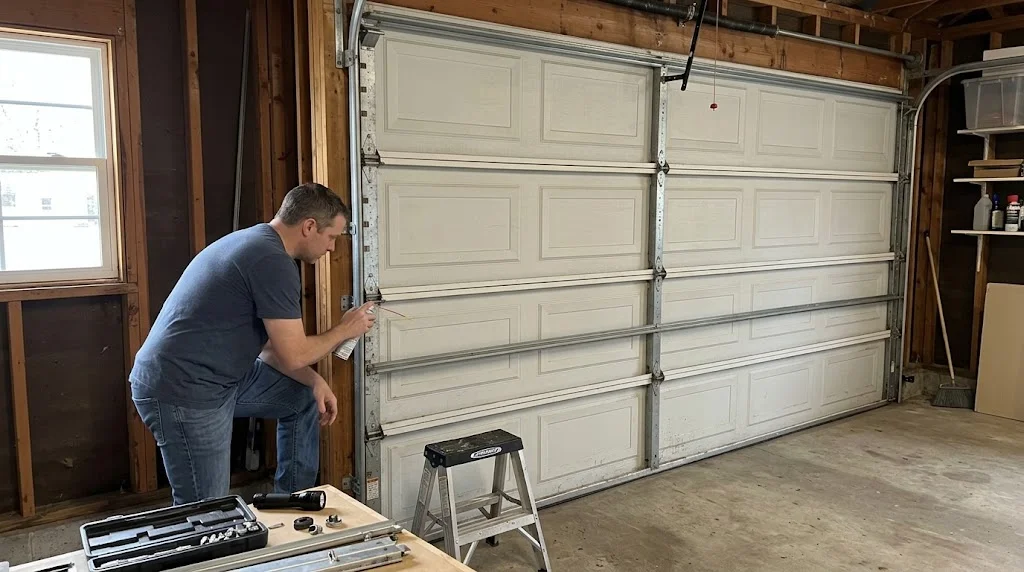
Preventing these five causes takes a handful of consistent habits, and catching a problem early almost always costs less than waiting for a full spring failure.
These steps help prevent premature wear across all five causes:
- Schedule regular maintenance every few months to catch dry or worn coils early
- Apply proper lubrication to the coil, hinges, and rollers on a consistent schedule
- Watch for visible damage or unusual noises that signal a developing problem
- Confirm the spring size matches the door’s weight during any replacement
- Address signs of rust or corrosion immediately rather than letting it spread further
Residential garage door maintenance on a predictable schedule extends the lifespan of the garage door springs and helps avoid a bigger repair down the line.
The Right Fix for a Failing Spring Starts With Finding the Cause
A garage door spring almost never fails for a single, isolated reason, since these five causes often build on each other quietly over months or years. Catching even one contributing cause early frequently extends the entire system’s remaining life by a meaningful margin.
TCAMM Door & Gate brings hands-on diagnostic experience to every spring inspection completed for homeowners throughout Aledo, TX, and the surrounding area. Contact us or give us a call today, and our trained technicians will pinpoint the exact cause and recommend the right fix the first time.
Frequently Asked Questions
Can weather really cause a garage door spring to fail?
Yes, extreme temperatures, high humidity, and frequent rain all affect how metal expands, contracts, and holds up against corrosion over time. One of our most common calls during seasonal changes involves a spring that finally gives out, sometimes leaving door panels slightly misaligned in the process.
Does the wrong spring size actually cause failure?
Yes, an incorrectly sized spring creates less tension than the door’s weight requires, which puts ongoing extra strain on the coil and can lead to a broken torsion spring. Our door company frequently finds mismatched springs installed during a rushed installation, adding extra expense down the road.
How does a lack of lubrication lead to spring failure?
Dry coils create friction with every cycle, and that friction speeds up premature wear far faster than a well-lubricated spring experiences. In our experience, proper maintenance and a quick lubrication schedule prevent a large share of the failures we see in the field.
Can rust alone cause a spring to snap?
Yes, rust weakens the metal structure of the coil until it becomes brittle enough to fail suddenly, sometimes without much other clear sign of the signs of wear building up. Garages with poor ventilation or frequent moisture exposure tend to develop this cause faster than drier environments.
Is heavy garage door use really that damaging over time?
Yes, heavier garage doors and frequent daily cycles both add up faster than homeowners typically expect, especially in households with multiple types of garage door springs. This is one of the more predictable causes, and an important factor in estimating remaining spring life.
Do both springs fail from the same cause at once?
Often, yes, since both springs experience the same conditions, cycle count, and environmental exposure over time. One of our most common calls follows one spring failing, with the second weak spring nearing the end of their lifespan and putting the entire structure at risk.
Can poor installation cause a spring to fail early?
Yes, incorrect tension from a poor installation puts uneven stress on the door from day one, without proper tools used correctly during setup. In our experience, this cause often creates a genuine safety hazard and a real lack of control over how the door moves.
Does ignoring one cause make the others worse?
Yes, a spring already weakened by rust or a lack of lubrication fails faster once heavy lifting demands or temperature swings are added on top. This layering effect adds a lot of stress to what should be a routine repair, and can compromise home security if left unaddressed.
How can I tell which cause affected my specific spring?
A trained technician can usually identify the cause by inspecting the coil for visible damage, checking cycle count, and confirming the spring's original sizing. In our experience, waiting too long often turns a simple fix into a garage door spring replacement that needs immediate attention.