
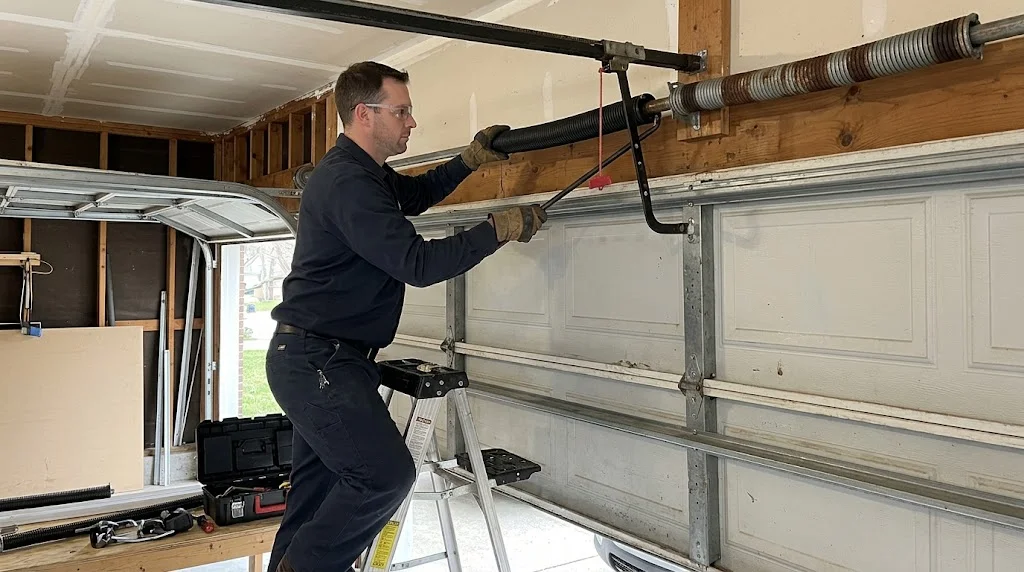
Garage door springs typically need replacing every 7 to 12 years, or roughly 10,000 to 20,000 cycles, depending on the spring type and daily use. A garage door relies on torsion springs or extension springs to manage the door’s weight, and those parts wear down gradually until they can no longer hold the necessary tension.
Homeowners rarely think about the garage door system until a spring shows visible damage, which is why residential garage door maintenance matters for catching problems early. This guide covers the signs of wear, common causes, and how often a garage door spring replacement should happen to avoid a safety hazard.
Key Takeaways
- A worn spring often shows signs of rust or visible damage before it fails completely
- The average garage door spring lasts 7 to 12 years under regular use
- High tension inside a torsion spring makes DIY replacement a serious injury risk
- Extreme temperatures and high humidity can speed up premature wear on both spring types
- Ignoring warning signs increases the chance of sudden failure and further damage to the entire system
- Residential garage door maintenance on a regular schedule extends the lifespan of garage door springs
Signs a Garage Door Spring Needs to Be Replaced
A garage door spring rarely fails without warning, and homeowners usually notice a handful of clear signs building up over several weeks before a full break happens.
Watch for these common warning signs of wear:
- The door feels heavier than usual or struggles during a full cycle
- A visible gap appears in the coil of the torsion spring
- Signs of rust or corrosion show up along the length of the spring
- The door hangs unevenly on one side of the door
- A loud bang comes from the spring area during use
To understand exactly what pushes a spring toward this point, read our guide on What Are the Signs a Garage Door Spring Needs to Be Replaced?, which walks through the exact symptoms that show up before a spring reaches full failure.
What Causes Garage Door Springs to Wear Out Faster?
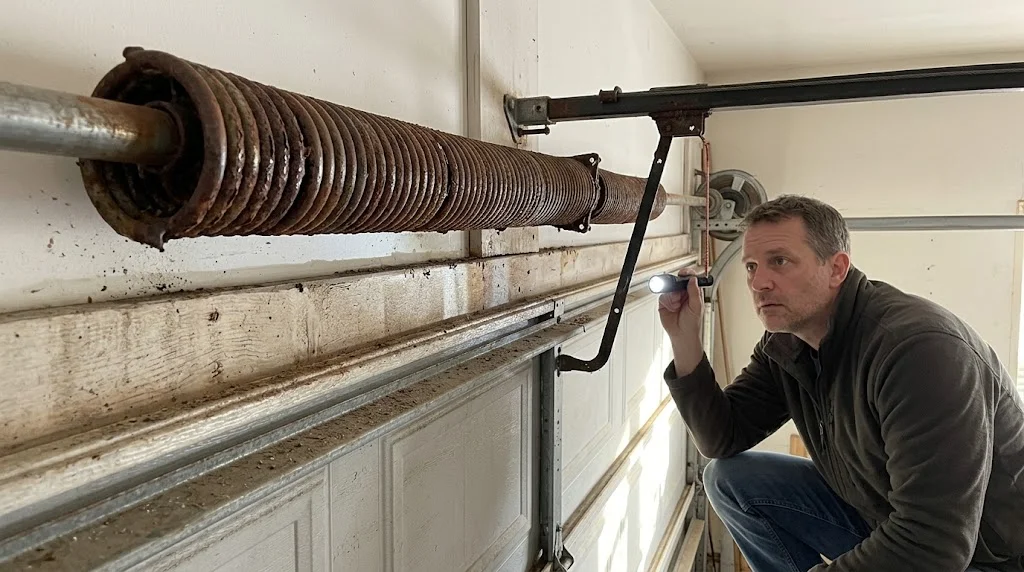
A garage door spring wears out from everyday use and environmental conditions, and knowing the cause helps set realistic replacement expectations.
These are the main reasons a spring wears out faster than expected:
- Heavy daily use adds extra strain to the coil with every cycle
- A lack of lubrication increases friction and accelerates premature wear
- High temperatures and high humidity cause repeated expansion and contraction in the coil
- The wrong spring size creates less tension than the door’s weight actually needs
- Frequent rain and moisture speed up signs of rust on unprotected metal
To see the specific reasons behind this wear pattern and how each factor accelerates the timeline, read our guide on What Causes Garage Door Springs to Fail?, which breaks down every contributing cause along with practical ways to slow the damage.
How Often Garage Door Springs Should Be Replaced
Garage door springs typically last 7 to 12 years, though spring type, cycle count, and maintenance quality all affect the exact timeline.
| Spring Type | Average Lifespan | Factor Affecting Lifespan |
|---|---|---|
| Torsion Spring | 10,000 to 20,000 cycles (7 to 12 years) | Cycle count and proper tools used during installation |
| Extension Spring | 7,000 to 10,000 cycles (5 to 9 years) | Door’s weight and exposure to environmental conditions |
| Heavy-Duty Torsion Spring | 15,000 to 25,000 cycles (10 to 15 years) | Precision garage door balancing and regular maintenance |
Homeowners who schedule broken garage door spring repair at the first sign of trouble typically avoid the more expensive damage that comes from a full failure.
Average Lifespan by Cycle Count
A standard torsion spring is rated for around 10,000 cycles, and several factors determine how quickly a spring reaches that number.
Cycle count depends on a mix of these conditions:
- Daily use frequency adds cycles faster in households with multiple daily openings
- Heavier garage doors accumulate wear faster with each additional cycle
- Regular maintenance slows cycle-related wear by reducing friction in the coil
- Proper tools used during installation help the spring reach its full rated cycle count
- High tension from an incorrect spring size shortens the effective cycle life
Tracking approximate cycle count against these factors gives a far more reliable estimate than relying on calendar years alone.
Average Lifespan by Spring Type
Torsion springs generally outlast extension springs, and the mechanism behind each type affects how long it holds up over time.
The type of spring installed shapes its expected lifespan in these ways:
- Twisting motion in torsion springs distributes stress more evenly across the coil
- Direct tension in extension springs wears the coil down faster over time
- Heavier garage doors typically need torsion springs to support a longer lifespan
- Extension springs cost less upfront but reach the end of their lifespan sooner
- Torsion springs handle high tension more reliably across repeated daily cycles
This difference in mechanism is one reason many homeowners choose garage door torsion spring repair when a heavier door needs a longer-lasting spring.
When Age Alone Signals a Replacement
A spring approaching 10 years old deserves a closer look, since several age-related factors increase the odds of a sudden failure.
Age-related wear tends to show up through these signs:
- Metal fatigue builds gradually inside the coil without obvious visible damage
- Signs of rust grow more likely once a spring passes 10 years
- Extreme temperatures and high humidity speed up wear across repeated seasons
- Long garage door springs left untouched for a decade lose necessary tension
- Environmental conditions inside the garage affect how age impacts each spring
Scheduling an inspection once a spring nears this age helps catch premature wear before it turns into a full breakdown.
Is It Safe to Open a Garage Door With a Broken Spring?
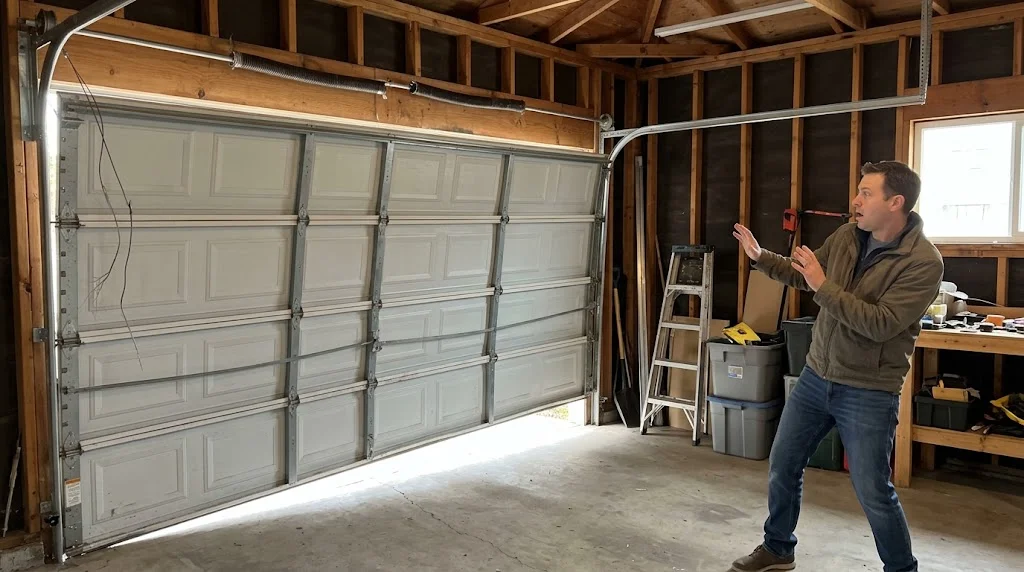
Opening a garage door with a broken spring is never safe, since the door loses the counterbalance that controls its gentle descent and weight distribution.
Here is why a broken spring creates real safety risks:
- The door’s full weight shifts onto the opener, which it was never built to hold
- A sudden failure in the remaining spring can drop the door without warning
- Manual lifting attempts risk serious injury from the door’s heavier weight
- An unbalanced door with a broken spring often jams or falls unevenly
- A malfunctioning door in this state risks further damage to panels and track
To learn what actually happens if that risk goes unaddressed for too long, read our guide on Is It Safe to Open a Garage Door With a Broken Spring?, which walks through the specific dangers of continued use in far more depth.
When to Call a Pro for Garage Door Spring Replacement
A garage door spring replacement calls for a trained technician, since a torsion spring’s high tension makes DIY work genuinely dangerous.
These situations call for professional help right away:
- Any job involving a torsion spring or its twisting mechanism under tension
- A spring showing signs of rust, a visible gap, or other clear signs of damage
- A door that suddenly stops working mid-cycle due to a broken spring
- Uncertainty about the correct spring size or necessary tension for the door
- A spring nearing the end of its lifespan based on age or cycle count
Attempting this kind of repair without the right training and tools turns a routine fix into a genuine safety hazard for anyone nearby.
How Professionals Replace Garage Door Springs Safely
A trained technician uses winding bars and other proper tools designed specifically to control the high tension stored inside a torsion spring during replacement.
The process generally follows these steps:
- The door gets secured before any tension releases from the old spring
- Winding bars release coil tension slowly in a controlled manner
- The old spring gets checked against the door’s weight and size
- A new spring gets matched to the panels and installed with proper tension
- The full system gets tested through several cycles for balanced movement
Garage door opener repair often gets bundled into the same visit whenever the opener shows signs of strain from compensating for a bad spring.
A Garage Door Spring Replacement Protects the Whole System
A garage door spring rarely fails out of nowhere, and most problems trace back to a clear sign that went unnoticed for weeks or months beforehand. Replacing a spring before it reaches the end of its expected lifespan protects the opener, the track, and every other part of the system from unnecessary strain.
TCAMM Door & Gate brings precision garage door expertise to every spring replacement completed for homeowners across Aledo, TX, and nearby areas. Contact us or give us a call today, and let our trained technicians restore your home security with a spring replacement done safely on the first visit.
Frequently Asked Questions
Can a garage door spring break without warning?
Yes, a spring can reach sudden failure even after showing few visible signs of wear beforehand, especially once it nears the lifespan of your spring's final stretch. In our experience, age and cycle count matter just as much as visible damage when predicting a failing extension spring's remaining life.
How long do garage door springs usually last?
Most garage springs last between 7 and 12 years, though heavier garage doors and frequent use can shorten the lifespan of the garage door springs considerably. Our rule of thumb from the field is to start watching closely once a spring passes the 10-year mark for the long term.
Is it expensive to replace a garage door spring?
Costs vary depending on spring type, the weight of the door, and whether both springs need replacement, with extra expense adding up if excessive pressure damaged other parts too. Our door company provides an honest, upfront estimate after inspecting the entire structure during a service visit.
Can I replace a garage door spring myself?
Replacing a spring yourself is strongly discouraged, since heavy lifting and the high tension involved create a genuine safety hazard even with the right tools. In our experience, even confident DIYers underestimate how much force a torsion spring releases, leading to a lack of control during removal.
Do both springs need replacing at the same time?
Yes, replacing both springs together is standard practice, since one weak spring under extra pressure usually means the other is close behind it. One of our most common calls follows a single spring failure, and we typically recommend replacing the matching spring too for proper maintenance.
What happens if I ignore a failing spring?
Ignoring a failing spring often leads to further damage across different sections of the door as the system compensates for lost tension. In our experience, waiting too long turns a simple spring swap into a repair involving multiple door panels and a lot of stress on the opener.
Does weather affect how long a spring lasts?
Yes, extreme temperatures and humidity affect both types of garage door springs, since torsion springs twist differently under seasonal strain than extension springs stretch. In our experience, garages without proper ventilation tend to see rust and corrosion develop noticeably faster, an important factor worth monitoring.
How often should a garage door spring be inspected?
A yearly inspection catches most warning signs before they turn into a sudden failure requiring immediate attention. Our rule of thumb from the field is to check for visible damage and unusual noises at the start of each season, for general informational purposes as a helpful reminder.
Should I call a professional for a squeaky or stiff spring?
Yes, a spring that squeaks or feels stiff during movement often signals early wear that benefits from a professional look. One of our most common calls involves catching this exact issue before it spreads to the entire structure of the door, and this response is offered for general informational purposes.