The parts inside a garage door opener keep the entire system running properly through every open-and-close cycle throughout the day. When even one of those parts starts to fail, the effects spread across the whole system and show up in ways that are easy to overlook until the damage is already done.
Recognizing the signs your garage door opener parts need repair gives you the chance to address the problem before it takes the system completely offline. Understanding what to look for puts you in a much better position to protect your door, your opener, and your household from an unexpected breakdown.
What Are the Common Garage Door Opener Parts?
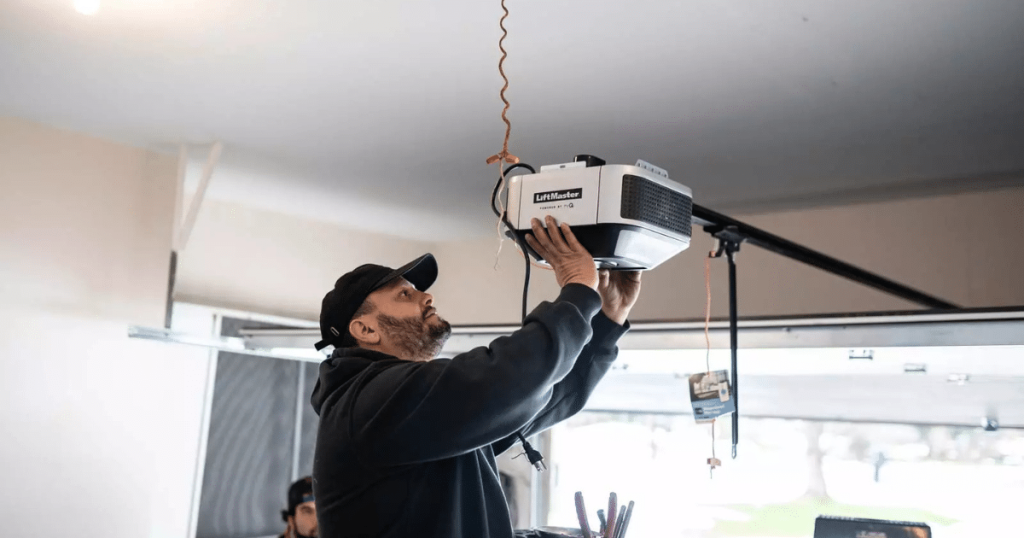
Every part inside a garage door opener carries a specific responsibility, and when one of them starts to wear down, the strain moves to the components around it, and the whole system begins to show it.
Here are the key parts of a garage door opener that every homeowner should know:
- Motor Unit — powers the movement of the door through every open and close cycle
- Drive System — connects the motor to the trolley and physically moves the door
- Safety Sensors — detect obstructions and stop the door from closing on people or objects
- Remote Control and Keypad — send wireless signals to the opener to trigger movement
- Logic Board — processes every command and coordinates all other components
To understand what each part does and how they work together as a system, read our guide on What Are the Parts of a Garage Door Opener?, which covers every key component that Aledo, TX, homeowners should know before a problem develops.
Common Reasons Why Garage Door Opener Parts Fail
Garage door opener parts don’t fail randomly, and each breakdown traces back to a specific cause that built up over time.
Here are the most common reasons parts fail:
- Wear and tear break down gears, rollers, and chains over repeated cycles
- Skipped maintenance lets dry parts and dirty sensors quietly wear the system down
- Power surges burn out the logic board and damage the motor without warning
- Extreme weather in Aledo, TX, pushes every moving part harder through heat and humidity
- Aging units past 10 to 15 years have parts that exceed their working lifespan
Knowing what drives these failures gives homeowners a much clearer picture of what to watch for before the system stops working.
Signs Your Garage Door Opener Parts Need Repair
Unusual Noises During Operation
Healthy openers run with minimal sound, and any new or worsening noise signals that one or more garage door opener parts are under stress.
Listen for these noise patterns during operation:
- Grinding sounds point to worn-out gears inside the motor unit
- Buzzing during startup means the motor is struggling to engage
- Rattling throughout the cycle comes from a loose chain drive or hardware
- Clicking at the start or end of a cycle traces back to the limit switches
- Squealing mid-cycle typically comes from dry rollers or a worn drive system
Every noise has a source, and identifying where in the cycle it occurs points directly to the failing component.
Delayed or Slow Response
Openers should respond within 1 to 2 seconds of a remote press, and anything beyond that indicates a part no longer performing at full capacity.
Watch for these response patterns:
- Pressing the remote triggers a five to ten-second delay before movement begins
- Motor hums briefly before the drive system engages
- Opener light activates, but the door stays still momentarily
- The garage door opener keypad accepts the code, but the door hesitates before responding
- The door starts slowly, then picks up speed mid-cycle
Delayed response patterns are reliable indicators of logic board deterioration or misalignment of garage door opener sensors.
Door Reverses Automatically
Automatic reversal without an obstruction is one of the clearest signs that safety sensors are no longer accurately reading the door path.
Look for these reversal patterns:
- The door closes halfway, then immediately travels back up
- The opener light blinks multiple times right after the reversal occurs
- The photo eye indicator light is off or blinking on one side
- The door reverses even when nothing is physically blocking the beam path
- Cleaning or realigning the sensors temporarily resolves the issue
Sensor alignment and signal confirmation are critical to every closing cycle, and any disruption to that beam causes the opener to treat the path as blocked.
Inconsistent Operation
An opener that works on some attempts but not others is showing internal wear, making it harder to predict as deterioration continues.
Watch for these inconsistency patterns:
- Remote controls work from certain angles but fail from others
- The door completes the cycle some days, but stops halfway on others
- The system performs normally in mild weather but struggles in heat or cold
- Multiple button presses are needed before the opener responds
- Performance varies noticeably between morning and afternoon operation
Inconsistent behavior almost always points to a worn motor, a failing logic board, or a signal transmission issue between the remote and the opener.
Light and Wall Switch Issues
Electrical symptoms surface in the opener light and wall console before they show up anywhere else in the system.
Watch for these electrical warning signs:
- The opener light flashes repeatedly without any command being sent
- Wall-mounted console buttons stop responding during normal operation
- Light stays on longer than usual or fails to turn on at all
- Pressing the wall switch causes flickering, but triggers no door movement
- Console display blinks in unusual sequences without any input
Flashing lights and unresponsive controls are built-in fault signals, and each pattern points to a specific electrical issue or logic board problem inside the opener.
Remote Control Range Issues
Range loss on a garage door opener remote is rarely about the remote itself, and the real cause is almost always inside the opener unit.
Watch for these range-related patterns:
- Remote only triggers the opener from inside the garage
- Pointing the remote directly at the unit is required for it to respond
- The range has shortened noticeably over recent weeks
- Replacing remote batteries made no difference in signal distance
- Nearby electronics seem to interfere with the remote signal
Antenna damage and logic board degradation are the two most common causes of shortened remote range, and both require a hands-on inspection to confirm.
Motor Runs but Door Does Not Move
A lack of movement from the motor, with no movement from the door, is a clear sign of a mechanical disconnect somewhere between the drive system and the door itself.
Look for these specific indicators:
- The garage door opener motor runs through its full cycle, but the door remains completely still
- The trolley travels along the rail without pulling the door arm
- The emergency release cord was pulled and never re-engaged after manual operation
- Internal gears are stripped and no longer transfer power to the drive system
- The carriage has separated from the drive mechanism under load
Identifying whether the disconnect is in the carriage, the gears, or the drive system is what determines the scope of the repair needed.
Age of the Unit
Opener age is one of the most reliable indicators of system condition, and a unit past its expected lifespan shows wear across multiple components simultaneously.
Watch for these age-related patterns:
- The unit is 10 to 15 years old and has never received a professional service
- Parts for a garage door opener in that model are becoming harder to source
- Opener lacks modern features like auto-reverse and rolling code technology
- Repair frequency has increased noticeably over the past year
- Motor struggles more than it used to under normal operating conditions
Age-related wear rarely stays isolated to one part, and a full inspection by a garage door repair professional gives the clearest picture of what the opener still has left.
What to Check on Your Garage Door Opener Parts
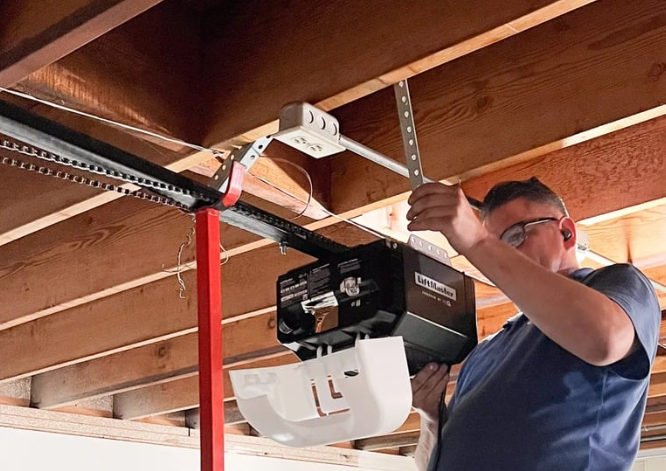
Before calling a garage door opener repair professional, there are a few things every homeowner can look at to get a clearer picture of what is going on with the system.
Here is what to check on your garage door opener parts:
- Safety sensors should have solid indicator lights with no blinking or debris
- The drive system should show no sagging, rust, or worn teeth on the chain
- The remote and keypad should be tested with fresh batteries before assuming a fault
- The motor unit should run without unusual sounds through a full cycle
- Hardware and rollers should move smoothly along the track without catching
Documenting what you find during the check gives a technician a stronger starting point when they arrive for the inspection.
What to Do After Noticing These Signs
Acting carefully after noticing warning signs protects both the system and everyone who uses the garage daily.
Here is what to do after noticing these signs:
- Stop operating the door to prevent additional stress on already compromised parts
- Disconnect power if any electrical symptoms like flickering lights or unresponsive controls are present
- Document the symptoms, including when they started and how often they occur
- Avoid manual force on a door that is struggling to complete its cycle
- Call a professional to inspect the system before the problem affects more components
Taking the right steps early gives a technician a clearer picture and leads to a more accurate diagnosis on the first visit.
What Happens When You Ignore Failing Garage Door Opener Parts
Ignoring early warning signs puts every connected component under pressure, and the longer it goes unaddressed, the more the system deteriorates.
Here is what happens when failing garage door opener parts go unchecked:
- Safety risks increase as sensors and springs lose control of door movement
- Secondary damage spreads when one worn part forces others to compensate
- Repair complexity grows as damage moves beyond the original failing part
- Complete system failure becomes unavoidable when enough parts cross their limit
- Easy access gets compromised when the opener can no longer complete a full cycle
Addressing the problem at the first sign of trouble is always the more practical path for every homeowner.
Should You Repair or Replace Your Garage Door Opener Parts?
Not every failing part means the entire system needs to go, and knowing the difference saves time, money, and unnecessary disruption.
| Factor | Repair | Replace |
| Age of Unit | Under 10 years old | 10 to 15 years or older |
| Extent of Damage | Single-component failure | Multiple parts failing at once |
| Parts Availability | Parts are still in production | Parts are discontinued or hard to source |
| Repair Frequency | First or second repair | Repairs have become recurring |
| Safety Features | Modern safety features intact | Lacks auto-reverse or rolling code technology |
| Cost | Repair is significantly lower | Repair approaches the cost of a new unit |
To explore which situation applies to your system, read our guide on When to Replace Your Garage Door Opener Parts, which covers every factor Aledo, TX homeowners should weigh before making a final decision.
How Professionals Diagnose Garage Door Opener Problems
A professional diagnosis goes beyond the obvious symptom, and every component is evaluated before a recommendation is made.
Here is how professionals diagnose garage door opener problems:
- Full visual inspection covers the motor, drive system, trolley, and hardware
- Sensor testing confirms whether the photo eyes are aligned and transmitting accurately
- Component testing checks the logic board, limit switches, and motor under load
- Remote and keypad evaluation identifies whether the signal issue is in the device or the opener
- Spring and hardware check assesses torsion springs and overall mechanical condition
Every finding from the inspection determines the repair or garage door replacement recommendation the technician provides.
How to Maintain Your Garage Door Opener Parts
Regular maintenance is what keeps every garage door opener part performing within its intended range throughout the year.
Here is how to maintain your garage door opener parts:
- Lubricate the drive system by applying garage door lubricant to the chain, sprockets, and rollers regularly
- Test safety sensors by placing an object in the door path and confirming the auto-reverse triggers
- Inspect hardware for loose bolts, worn rollers, and any signs of rust or corrosion
- Check the remote and keypad batteries and replace them before signal issues develop
- Schedule professional tune-ups at least once a year to catch wear before it affects performance
To keep your system in top condition year-round, visit our guide on How to Maintain Your Garage Door Opener Parts, which walks Aledo, TX homeowners through every step of a proper maintenance routine.
Do Not Wait Until Your Garage Door Opener Parts Stop Working Completely
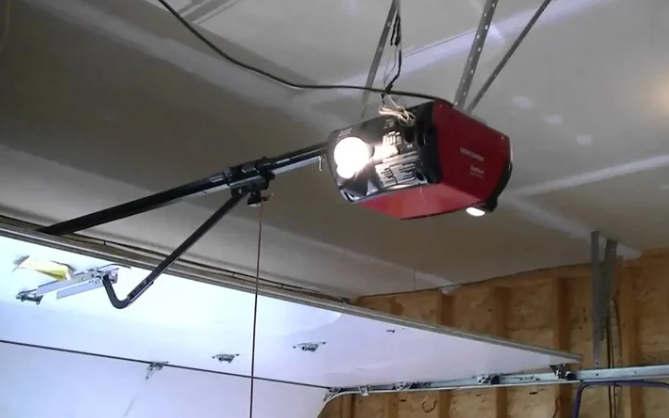
Unusual noises, delayed responses, automatic reversals, and inconsistent operation are all clear indicators that your garage door opener parts need professional attention. Getting the system inspected at the first sign of trouble is what keeps a manageable repair from turning into a full system overhaul.
TCAMM Door & Gate has been serving homeowners across Aledo, TX with thorough inspections and expert garage door services that get the job done right. Contact us or give us a call today, and let our technicians assess your garage door opener parts and restore your system to full working condition.
Frequently Asked Questions
Can a garage door opener work even when one of its parts is failing?
Yes, but not reliably. A failing part often allows the system to function partially, but the remaining components are forced to compensate for the weakness, which accelerates wear across the entire opener until it can no longer complete a full cycle.
How often should garage door opener parts be professionally inspected?
Most garage door professionals recommend a full inspection at least once a year. Homes with high daily usage may benefit from more frequent checkups to catch wear before it affects performance.
Is it possible for garage door opener parts to fail without any visible warning signs?
Yes, some internal components, like the logic board, can fail without producing obvious symptoms beforehand. Regular inspections are the most reliable way to catch hidden deterioration before it causes a full system stoppage.
What is the first part that typically fails in an aging garage door opener?
The drive gear is usually the first component to show significant wear in an aging unit. It sits directly between the motor and the drive system, so it absorbs the most stress during every cycle.
Where can I find garage door opener parts near me for a quick repair?
Searching for garage door opener parts near me will return local suppliers, hardware stores, and authorized dealers in your area. Working with a local professional is often the fastest way to source the right part and get the repair completed correctly.
How do I know if garage door opener replacement parts will fit my existing unit?
Garage door opener replacement parts are often brand and model-specific, so checking the unit's label for the model number before purchasing is essential. A garage door technician can also verify compatibility during a service visit to avoid installing the wrong component.
Can a garage door opener be repaired if the logic board is damaged?
Yes, logic boards can be replaced without replacing the entire unit in most cases. Availability depends on the brand and model, so older units may require sourcing the part through a specialist.
What happens to the other parts when the motor starts to fail?
A failing motor puts added load on the drive system, trolley, and carriage as it struggles to complete each cycle. Over time, that added strain accelerates wear on components that would otherwise still have significant life remaining.
How long does a typical garage door opener repair take?
Most standard repairs are completed within one to two hours, depending on the part involved. More complex issues involving the logic board or drive system may take longer if additional diagnostic steps are needed.