
A loud garage door is one of those problems that is easy to put off but hard to ignore once it starts affecting your daily routine. The banging, scraping, and grinding sounds coming from a worn or neglected door signal that the system is working harder than it should.
Proper garage door noise reduction starts with understanding the difference between what a homeowner can fix and what requires a trained professional. Getting that distinction right is what this guide is all about.
Is Fixing a Noisy Garage Door a Job for You or a Professional?
Garage door noise means something specific is happening within the system, and whether that signals a DIY fix or a professional repair depends entirely on what the door is signaling with each cycle.
Here are the most common signals that tell you which direction to take:
- Loose hardware and missing lubrication are minor issues most homeowners can handle on their own.
- Worsening noise with every cycle signals a mechanical problem that needs professional evaluation.
- Worn rollers or loose bolts that you can visually confirm are generally within DIY range.
- Noise traced back to springs or cables always calls for a professional due to extreme tension.
- Recurring noise after a DIY attempt means the root cause was never properly identified.
To understand how these signals fit into the full picture, read our guide on Garage Door Noise Reduction Tips for a Quieter Home, which walks through everything you need to know to keep your garage door quiet.
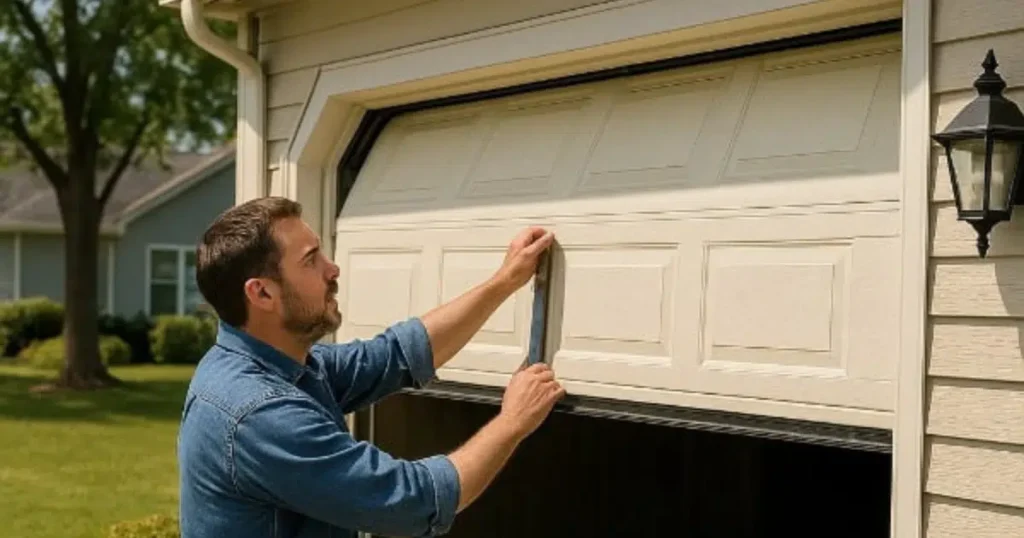
Common Causes of a Noisy Garage Door
Pinpointing what is driving the noise is the first step toward knowing whether a DIY fix or a professional repair is the right call.
Here are the most common causes of a noisy garage door:
- Worn or damaged garage door rollers drag and bump along the track instead of rolling smoothly.
- Loose hardware rattles and vibrates with every cycle, creating noise that gets worse over time.
- Lack of lubrication leaves metal parts grinding against each other with no protection.
- Damaged or unbalanced springs force the opener to strain, producing loud humming and grinding sounds.
- Misaligned garage door tracks cause the door to scrape and jerk instead of moving in a straight line.
To dig into what each of these causes actually means for your door, read our guide on Garage Door Noise Reduction: What’s Causing the Noise?, which breaks down the most common noise triggers homeowners in Aledo, TX deal with and what they point to.
Deciding Factors When Choosing DIY or Hiring a Garage Door Pro
Cost
Weighing the cost of DIY against hiring a pro goes beyond the price of parts and includes the risk of making the problem more expensive to fix later.
| DIY | Hiring a Pro | |
| Upfront Cost | Lower, only parts and products needed | Higher, but includes full inspection |
| Risk of Extra Cost | Incorrect repairs can lead to more damage | Problems caught early before they worsen |
| Long-Term Cost | Repeated attempts add up over time | One proper repair saves more in the long run |
| Average Cost | May depend on parts and products used | May depend on the type of repair and the extent of damage |
A proper professional repair, done correctly from the start, almost always costs less than multiple failed DIY attempts over time.
Safety
Certain garage door repairs carry a level of physical risk that makes professional expertise the only practical option for getting the job done without incident.
| DIY | Hiring a Pro | |
| Spring and Cable Handling | High risk without proper training | Handled with specialized tools and expertise |
| Moving Parts | Can shift suddenly during improper repair | Managed safely with professional equipment |
| Injury Risk | One of the leading causes of garage door injuries | Significantly reduced with trained technicians |
| Tension Components | Should never be attempted without training | Requires professional attention at all times |
Physical risk is what separates a manageable DIY task from one that belongs to a professional, especially when garage door opener repair is involved.
Time and Convenience
How long a repair actually takes depends heavily on experience, and the gap between a homeowner and a professional often translates directly into hours of extra work.
| DIY | Hiring a Pro | |
| Simple Tasks | Under an hour for lubrication and tightening | Completed faster with professional tools |
| Complex Repairs | Can stretch into several hours without experience | Completed in a single visit |
| Failed Repairs | Adds extra time and frustration for rework | Rarely needs to be redone |
| Overall Convenience | Requires research, tools, and trial and error | Arrives fully prepared with parts and equipment |
When the full-time cost of research, trial and error, and potential rework is considered, hiring a professional is often the more practical choice.
Quality of Results
Professional repairs consistently produce better outcomes because a trained technician addresses the root cause rather than just the most obvious symptom.
| DIY | Hiring a Pro | |
| Scope of Repair | Addresses only the visible problem | Inspects the entire system thoroughly |
| Parts Used | May not match the specific door model | Correct parts matched to the exact model |
| Installation Quality | Improper installation is a common issue | Installed the first time correctly |
| Noise Recurrence | Noise often returns shortly after a DIY fix | Root cause fully resolved for lasting results |
Proper garage door repair practices explain why correct installation and component matching directly affect how long a repair holds up over time.
Long-Term Effectiveness
A repair that solves the noise for good requires addressing the door’s full mechanical condition, not just the part currently making the most noise.
| DIY | Hiring a Pro | |
| Root Cause | Surface-level fix that may not last | Targets the actual source of the noise |
| Noise Recurrence | Noise tends to return after a short period | Less likely to recur after a professional repair |
| Component Lifespan | Wear continues if the root cause is not addressed | Extended with proper maintenance and repair |
| Seasonal Stress | Temperature changes can worsen unresolved issues | Professional upkeep accounts for seasonal wear |
Addressing the root cause rather than the symptom is what makes a professional repair last significantly longer than a DIY fix.
Pros and Cons
Knowing the honest trade-offs between DIY and hiring a pro helps homeowners make a confident decision based on their specific situation.
DIY
Pros:
- Lower upfront cost for minor repairs
- Convenient for simple tasks like lubrication and tightening hardware
- Gives homeowners a better understanding of their garage door system
Cons:
- Higher risk of incorrect repairs leading to further damage
- Not suitable for high-tension components like springs and cables
- Can take significantly more time without the right tools or experience
Hiring a Pro
Pros:
- Comprehensive inspection that identifies all noise issues at once
- Correct tools, parts, and professional expertise for every type of repair
- Longer-lasting results with proper installation and professional maintenance
Cons:
- Higher upfront cost compared to a basic DIY fix
- Requires scheduling and waiting for an available appointment
- May feel unnecessary for very minor issues that a homeowner can handle independently
Matching the right approach to your garage door’s actual condition always starts with understanding what each option truly entails.
Garage Door Fixes Homeowners Can Do on Their Own
Not every noisy garage door fix requires a professional, and some of the most effective solutions are within reach for any homeowner with basic tools.
Here are the garage door fixes most homeowners can handle on their own:
- Applying white lithium grease or silicone spray to rollers, hinges, and springs reduces grinding sounds.
- Tightening loose bolts and brackets stops rattling from regular use.
- Cleaning debris and old grease from the tracks prevents dragging and scraping.
- Replacing a single worn nylon roller is manageable when the tension system is not involved.
- Adjusting garage door opener settings can resolve minor operational noise.
Regularly handling these basic fixes prevents minor noise issues from turning into problems that require a full garage door opener maintenance visit.
Garage Door Repairs You Should Never DIY
Certain repairs go beyond what basic tools and good intentions can handle, and getting them wrong often costs more to fix than the original problem.
Here are the garage door repairs that should always be left to a professional:
- Spring replacements involve extreme tension that can cause physical harm if mishandled.
- Cable repairs can cause sudden door failure if done incorrectly.
- Track realignment impacts the entire door system if not done precisely.
- Opener motor and electrical repairs require professional diagnosis.
- Structural fixes need a full professional inspection before any work begins.
Without professional training, attempting any of these puts both the homeowner and the door at risk of garage door repairs that cost far more than the original problem.
Preventive Maintenance Tips to Keep Your Garage Door Quiet
Regular upkeep is what separates a garage door that stays quiet after a repair from one that starts making noise again within weeks.
Keep these maintenance habits in place after every repair:
- Lubricate all moving parts twice a year with white lithium grease or silicone spray.
- Tighten loose hardware every few months to stop vibration and rattling.
- Replace worn nylon rollers before they begin to drag along the track.
- Check the door’s balance regularly to catch uneven tension early.
- Schedule a professional tune-up at least once a year for a full inspection.
To learn how regular upkeep prevents noise from coming back, read our guide on How Maintenance Helps With Garage Door Noise Reduction, which walks through everything you need to know about keeping your garage door in top condition.
DIY or Hire a Pro — Make the Right Call for Your Garage Door Today
A noisy garage door is never just an annoyance, and addressing it early helps prevent a minor noise problem from becoming a costly repair. Knowing the difference between what you can fix yourself and what needs a professional is the foundation of smart garage door noise reduction.
TCAMM Door & Gate serves homeowners throughout Aledo, TX with professional garage door repair services that are thorough, honest, and long-lasting. Contact us or give us a call and let our team restore the quiet, smooth operation your garage door deserves.
Frequently Asked Questions
Does the age of my garage door determine whether I should do it myself or hire a pro?
Yes, it does. An older door with multiple worn components is better served by a professional inspection since several issues may be contributing to the noise at once.
Can the weather in Aledo, TX, affect the noise from a garage door?
Yes, it can. A misaligned track forces rollers to work against the door's natural path, which wears on the hinges, springs, and opener motor and makes the eventual repair more involved and expensive.
What should I expect during a professional garage door noise inspection?
A technician will check the door balance, inspect all moving parts, test the opener, and identify the root cause of the noise. Most inspections are completed in a single visit and include a full report of what needs attention.
How do I know if my garage door needs a full replacement instead of a repair?
A door with widespread structural damage, multiple failing components, or a history of repeated repairs without lasting results is likely a better candidate for replacement. A professional technician will give you a clear picture of whether repair or replacement makes more sense.
How do I find a trustworthy garage door pro in Aledo, TX?
Look for a company with verified local reviews, clear service pricing, and technicians who are willing to explain the problem before starting any work. A trustworthy professional will always provide a full assessment before recommending any garage door service.
How do I know if the noise is coming from the door itself or the opener?
Disconnect the opener and operate the door manually to isolate the source. If the noise disappears when the opener is disconnected, the opener is the problem, not the door itself.
Can garage door noise get worse during certain seasons?
Yes, temperature changes cause metal components to expand and contract, increasing friction and accelerating wear on springs, rollers, and cables. Scheduling a regular garage door maintenance visit before each season helps keep noise levels under control throughout the year.
What is the first thing a homeowner should check when a garage door starts making noise?
Start by inspecting the hardware for loose bolts and brackets, then check the rollers and hinges for visible wear. A noisy garage door repair is often as straightforward as tightening a few components and applying fresh lubrication.
How do I know if my garage door springs are contributing to the noise?
Listen for loud popping, snapping, or straining sounds when the door moves, as these are common signs of spring wear or damage. Knowing how to reduce garage door noise from springs starts with a professional inspection, since spring repairs should never be attempted without proper training.