
When a garage door stops responding after the release handle has been used, the problem often involves the reconnect process rather than the opener alone. In Aledo, TX, homeowners may notice that the door remains disconnected and does not return to normal automatic operation.
Resetting a garage door manual release restores the connection between the door and the opener after manual use interrupts regular operation. When that reset does not work as expected, the issue may be due to door resistance, opener misalignment, or a condition requiring professional garage door repair.
Why Does a Manual Garage Door Release Need to Be Reset?
A manual garage door release usually needs to be reset when the opener disconnects from the door, because the system cannot return to automatic operation due to the reconnect point, release position, or door travel no longer being aligned for normal operation.
Common reasons the release may need to be reset include:
- Pulling the release cord disconnects the opener from the door during manual use.
- Misalignment between the opener carriage and the reconnect point prevents reengagement.
- A release handle that stays out of position keeps the system from reconnecting.
- Resistance in the door movement interrupts the opener’s ability to latch back on.
- Existing opener or travel issues stop automatic operation from resuming.
When these conditions prevent the door from reconnecting after manual use, our blog on Garage Door Manual Release Jammed? Troubleshooting That Actually Helps explains how stuck release conditions develop and why a reset may not restore normal operation on its own.
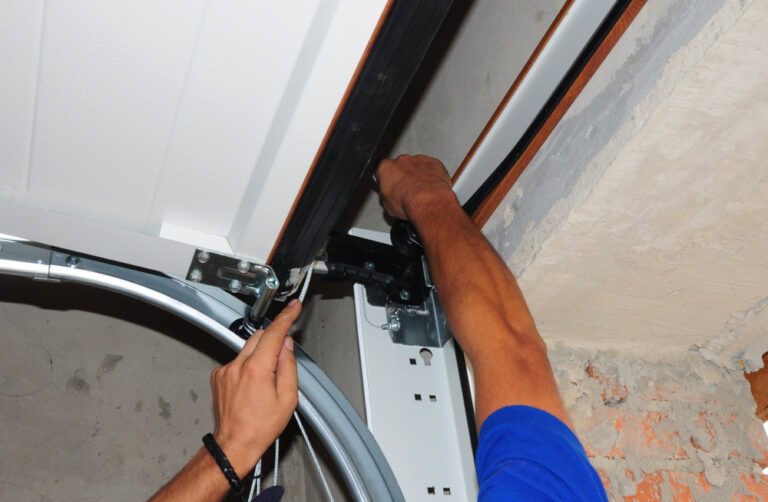
What to Check Before Resetting the Manual Release
Before resetting the manual release, homeowners should confirm that the door and opener are in a condition that allows the reconnect process to work properly.
Check these conditions first:
- Make sure the garage door is fully closed before attempting a reset.
- Confirm the garage door opener is disengaged and no longer controlling door movement.
- Check whether the release cord has returned to the correct position after manual use.
- Look for visible resistance along the garage door track, on the rollers, or at the bottom of the door.
- Notice whether the door feels uneven or unusually heavy when manually moved.
Problems with door balance, track resistance, or opener response can stop the reset from working properly, and recurring issues like these often become easier to catch during routine garage door opener maintenance.
Steps to Reset a Garage Door Manual Release Before Calling a Professional
Pull the Release Cord Back Toward the Reset Position
Resetting often begins with returning the release mechanism to a position where the opener can catch and reengage it during the next cycle.
Watch for signs like:
- Pull the release cord toward the opener rail instead of leaving it angled away from the rail.
- Noticing whether the red handle settles back into a reconnect position.
- Checking if the latch looks ready to reconnect instead of hanging open.
- Confirming the emergency release is no longer locked in manual mode.
According to Clopay, the emergency release cord disconnects the opener from the door, so returning the mechanism to its engaged position is required to allow the trolley to reconnect during the next operating cycle.
Move the Door Into the Correct Position for Reconnection
Proper door placement matters because the reconnect point and the opener carriage must align for the reset to complete.
Focus on conditions such as:
- Keeping the door near the closed position before trying to restore automatic movement.
- Watching whether the door sits evenly along the floor and opens.
- Noting any resistance that keeps the door from settling where it should.
- Looking for alignment between the reconnect point and the opener path.
Better alignment at this stage gives the reconnect mechanism a stronger chance of engaging during the next opener cycle.
Activate the Opener to Reengage the Trolley
Opener activation allows the carriage to travel along the rail and attempt to reconnect the door to the automatic system.
Pay attention to patterns such as:
- Pressing the wall control once to start the opener cycle.
- Watching whether the opener carriage moves toward the reconnect point.
- Listening for a latch sound that signals reengagement.
- Checking whether the trolley catches instead of passing by.
Genie notes that reengagement occurs after the emergency-release cord is returned and the opener completes its reconnect movement.
Test Whether the Door and Opener Are Working Together Again
Successful resetting should restore coordinated movement between the opener and the door, rather than leaving the system disconnected after one cycle.
Look for results including:
- The opening movement starts smoothly after the wall control is pressed.
- Closing travel that stays connected from start to finish.
- A trolley that remains latched during repeated operation.
- Door response that matches the opener without slipping back into manual mode.
Normal movement across more than one cycle usually confirms that the garage door manual release has reset and the opener is controlling the door again.
Why a Garage Door Manual Release May Not Reset Properly
Reset failure usually means the opener, release mechanism, or door movement is still preventing the system from returning to automatic operation.
Problems that often interrupt the reset process include:
- Misalignment between the opener carriage and the reconnect point.
- A release cord that stays in the disengaged position after manual use.
- Uneven door movement makes the system harder to reattach.
- Resistance in the garage door track or rollers during travel.
- Existing balance problems that leave the door too heavy to move normally.
Manual lifting problems often develop from the same movement and balance issues that interrupt resetting, and our guide on Why Won’t My Garage Door Lift Up Manually? explains which conditions usually keep the door from moving normally by hand.
How a Garage Door Emergency Release Stuck Condition Can Prevent Resetting
Reset attempts can fail if the emergency release mechanism remains disengaged, preventing the opener from reconnecting with the door.
Common signs of this condition include:
- Restricted movement in the release handle during reset attempts.
- Internal wear is preventing the latch from returning fully.
- Repeated pulling that leaves the disconnect mechanism misaligned.
- Reconnection failure even after the opener begins moving again.
Persistent resistance in the release mechanism can interrupt the reset process and keep the door operating in manual mode instead of reconnecting with the opener system.
What Happens After the Garage Door Manual Release Resets Correctly
Successful resetting restores the connection between the opener and the door, allowing automatic movement to resume normally.
Results that usually show the system has reset include:
- The trolley reconnects to the opener arm during the next cycle.
- Wall control commands move the door, not just run the motor.
- Automatic travel resumes without the door slipping back into manual mode.
- Repeated opening and closing cycles stay connected from start to finish.
Ongoing disconnect problems after a successful reset often point to a reattachment issue, and our blog on How to Reconnect a Garage Door Manual Release in Aledo, TX, explains why the latch may still fail to stay engaged.
Why the Manual Release May Still Stay Disconnected After a Reset Attempt
Even after a reset attempt, the manual release may stay disconnected if the latch, carriage, or door position still prevents proper reattachment.
Issues that often keep the system disconnected include:
- The opener runs, but the door does not reattach to the trolley.
- Wear at the reconnection point prevents the latch from holding.
- Damage inside the disconnect mechanism interrupts engagement.
- Alignment problems prevent the opener and door from fully reconnecting.
Repeated disconnects after a reset usually indicate a latch, carriage, or alignment issue that may require professional garage door opener repair before the system reconnects consistently.
When to Call a Professional for Manual Garage Door Release Problems in Aledo, TX
Professional service is often needed when the release system will not reset, reconnect, or return the door to normal operation.
Common signs that service may be needed include:
- The door will not reconnect to the opener after repeated reset attempts.
- The release mechanism feels stuck, loose, or unresponsive during use.
- Door movement stays uneven, heavy, or interrupted after manual operation.
- Resetting works briefly, then the same disconnect problem returns.
Persistent release and reconnection problems often indicate that the door and garage door openers are no longer working together as they should, especially when the issue keeps recurring after reset attempts.

Get Expert Help Resetting a Garage Door Manual Release in Aledo, TX
Resetting a garage door manual release can restore automatic operation when the opener disconnects from the door. Repeated reset problems often indicate issues with the opener carriage, door balance, track alignment, or other mechanical components that affect normal operation.
TCAMM Door & Gate helps homeowners in Aledo, TX, address manual-release issues that prevent the door from reconnecting and operating as expected. If your garage door manual release will not reset or the opener still will not reattach properly, contact us or give us a call today for professional service and a complete system inspection.
Frequently Asked Questions
Does resetting the manual release affect the opener settings?
No. Resetting the manual release usually reconnects the door without changing remote settings or travel limits. Some models have a separate reset button, and any specific instructions should be reviewed for informational purposes only.
Can a garage door opener run while the door stays disconnected?
Yes. The motor can run while the door stays disconnected if the trolley does not latch back on after the red emergency release cord is used. In that situation, the opener moves, but the garage door does not open.
Why does the release cord hang differently after it is used?
The cord can hang at a different angle because the disconnect mechanism shifts after the opener separates from the door. A change in the red cord, red emergency release, or red rope position can also show that the latch has not fully returned.
Can cold weather affect how the manual release resets?
Yes. A bent panel can change the path of the door and interfere with the opening of the garage door. Damage near the bottom of the door can also affect alignment and make lifting harder.
Does an older opener make release reset problems more common?
Yes. Older systems often have more wear in the carriage, rail, and other moving parts, especially on an overhead door that has seen many cycles. More years of experience with daily use often mean more stress on the opener system.
Can a partially open garage door prevent the release from resetting?
Yes. A partially open door can leave the opener and the reconnect point out of alignment, and problems such as a broken spring, worn torsion springs, or uneven spring tension can worsen the issue. Resetting usually works better when the door is closer to the closed position.
How do I know if the trolley is the reason the release will not reset?
A trolley problem likely occurs when the opener runs, but the door does not reconnect to it afterward. In many cases, a garage door manual release stuck issue is really a latch or trolley engagement problem rather than a problem with the cord alone.
Can a worn release handle cause reset failure?
Yes. A worn handle can affect how the disconnect mechanism moves, especially if a garage door spring problem adds strain during reconnection. Improper handling can also speed up wear and make the release harder to reset.
When should a stuck manual release be treated as an urgent repair?
A stuck manual release becomes urgent when the door will not reconnect, will not move normally, or creates a security concern. Problems involving roller garage doors or unresponsive safety sensors should be handled with adequate training, proper safety precautions, and extreme caution because forced movement can lead to serious injury.