Choosing the wrong automatic gate for a driveway can create problems that extend beyond appearance, including poor functionality and premature mechanical failure. The type of drive gate selected determines how well it performs, how long it lasts, and how well it fits the specific demands of the property.
Automatic driveway gates are not a one-size-fits-all solution, and each type comes with its own set of requirements, strengths, and limitations. Getting familiar with the available types is what makes the difference between a gate that works for decades and one that causes problems from the start.
Why Does the Type of Automatic Gate Chosen Affect a Property?
Selecting the wrong automatic gate type sets off a chain of problems that affect how the system is installed, how it performs day-to-day, and how well it holds up under varying property conditions and usage demands.
Key reasons why the gate type directly affects a property include:
- Driveway layout determines which gate mechanism will clear the opening
- Ground surface conditions dictate which systems can run without binding
- Property size influences panel dimensions and motor power requirements
- Home architecture affects which materials complement the existing style
- Daily usage frequency determines what motor grade is needed
To understand the full value of investing in the right system, read our guide on Automatic Gate for Driveway: Top Benefits, which covers the core advantages that automatic driveway gates deliver in terms of security, functionality, and long-term value.
What Are the Main Types of Automatic Driveway Gates?
Sliding Gates
Sliding gates are a practical choice for properties where front clearance is limited or the driveway runs along a slope.
What sets sliding gates apart from other automatic gate types:
- Guided by a V-track embedded into the driveway for horizontal movement
- Lateral space allows the panel to travel fully without obstruction
- Powered by a heavy-duty gate opener built for consistent daily cycling
- Steel and aluminum are the most common panel materials used
- Sloped driveways benefit since no outward swing clearance is needed
Sliding gates handle high-traffic use without compromising security or taking up valuable driveway space.
Swing Gates
Swing gates bring a classic look to any driveway entrance, and properties with generous front clearance get the most out of what a swing gate delivers.
Key characteristics that define swing gates as a driveway option:
- The direction of opening depends on the driveway slope and available clearance
- Single or double panels cover one or both sides of the entrance
- Motorized arms attached to each post drive every panel open and closed
- Wrought iron and steel rank as the top materials for ornamental designs
- Underground operators keep the motor hidden below the post base
Swing gates remain a top pick for estate-style properties where automatic gate design and overall function carry equal weight.
Bi-Folding Gates (Speed Gates)
Bi-folding gates are built for driveways where speed of entry and limited lateral space are both key factors.
Notable features that make bi-folding gates a practical driveway solution:
- Accordion-style folding panels reduce lateral space during every open cycle
- Faster open and close cycles set them apart from swing or sliding designs
- Compact footprint keeps the gate contained when fully open
- Short approach driveways benefit most from the folding mechanism
- High-traffic properties gain consistent and uninterrupted daily access
Bi-folding gates provide fast, space-efficient access without sacrificing structural performance.
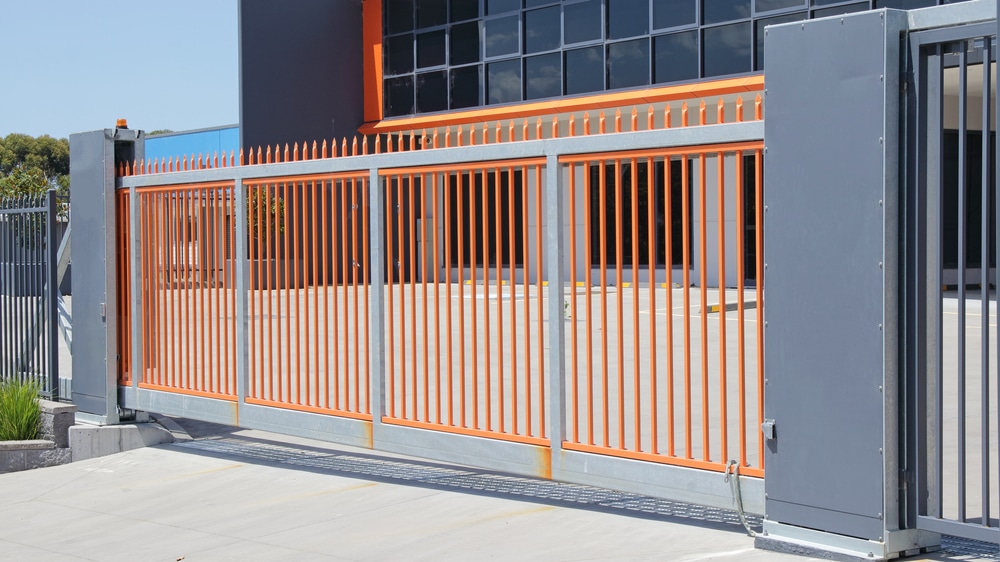
Cantilever Gates
Cantilever gates are built for uneven terrain, where a track-free design makes all the difference in long-term gate performance.
Defining qualities that make cantilever gates stand out in difficult terrain:
- Ground clearance is maintained since no floor track runs across the opening
- Gravel and debris cannot interfere with panel movement at any point
- Heavy panels are supported entirely by rollers on reinforced side posts
- Sloped surfaces are handled consistently, where floor tracks would bind
- Commercial entrances with heavy vehicle traffic perform well with cantilever systems
Cantilever systems offer reliable ground-independent operation, making automatic gate installation on difficult terrain far more straightforward.
Vertical Pivot Gates (VPGs)
Vertical pivot gates offer a space-saving solution for properties with no lateral clearance on either side of the driveway opening.
Standout traits that separate VPGs from every other automatic gate type:
- Pivot-based movement lifts the panel vertically to allow vehicle entry
- No side clearance is needed since all movement travels upward
- High-torque motors lift and hold the panel throughout the open cycle
- High-security residential and commercial entrances benefit most from VPGs
- Remote control systems, keypads, and smart access platforms all integrate with VPGs
Vertical pivot gates are a strong fit for properties where space constraints make horizontal gate movement impossible.
What Materials Are Used in Each Type of Automatic Gate?
Material choice directly affects how an automatic gate performs, how long it lasts, and how much upkeep it demands over time.
| Material | Best For | Key Benefit | Watch Out For |
| Wrought Iron | Swing and sliding gates | Superior strength and durability | Rust and corrosion without proper coating |
| Steel | Cantilever and sliding gates | Heavy-duty structural integrity | Weight requires a stronger motor |
| Aluminum | Swing and sliding gates | Lightweight and rust-resistant | Less sturdy than iron or steel |
| Wood | Swing and bi-folding gates | Natural and classic aesthetic | Rot, warping, and pest invasion over time |
| Composite | Swing and bi-folding gates | Mimics wood with better moisture resistance | Higher average cost than standard wood |
Matching the right material to the right gate type determines long-term durability and performance across any property.
Which Automatic Gate Type Works Best for Different Driveway Layouts?
Driveway layout is one of the strongest factors that determines which automatic gate type will perform consistently without mechanical strain or operational issues.
| Driveway Layout | Best Gate Type | Why It Works |
| Narrow or short driveways | Cantilever or bi-folding gates | Operate without wide lateral clearance |
| Sloped or uneven terrain | Cantilever or vertical pivot gates | No floor track required for operation |
| Wide and flat driveways | Swing or sliding gates | Full clearance allows proper panel movement |
| Gravel or unpaved surfaces | Cantilever gates | Hovers above ground with no track interference |
| High-traffic long driveways | Heavy-duty sliding gates | Built for frequent and consistent daily cycling |
Matching the gate type to the driveway layout helps keep the system operating at full capacity and prevents unnecessary wear over time.
How to Match the Right Automatic Gate Type to a Driveway
Selecting an automatic gate for a driveway goes beyond appearance and requires a close look at space, usage, and the property’s long-term needs.
Steps to match the right automatic gate type to a driveway:
- Measure driveway width and approach distance to confirm which gate mechanisms will fit
- Evaluate ground surface type to confirm which systems can run without binding
- Assess daily usage volume to determine what motor grade is needed
- Review the property style to identify which materials and designs complement the existing look
- Confirm power source availability to verify whether an electric gate can be supported
Following these steps before committing to a gate type prevents installation setbacks and ensures the system fits the property from the start.
What Each Automatic Gate Type Requires Before Installation
Each automatic gate type has specific pre-installation requirements that must be met before the system can operate properly.
What to prepare before automatic driveway gate installation begins:
- Ground surface must be leveled and cleared to support the gate type selected
- Post foundations need proper depth based on panel weight and the gate mechanism
- The power source must be positioned close enough to support the motor and controls
- Local permits and HOA approvals must be secured before installation begins
- Licensed installers must assess the site for compatibility with the chosen gate type
To understand what can go wrong when pre-installation steps are overlooked, read our guide on Common Automatic Gate Problems and How to Fix Them, which covers the most frequent issues that stem from improper site preparation and installation.
How to Care for Each Type of Automatic Gate
Caring for an automatic gate depends on the type and material, and consistent upkeep is what keeps every system running without unexpected breakdowns.
Regular automatic gate maintenance across different gate types:
- Metal gates need routine lubrication on hinges, rollers, and mechanical parts
- Wood and composite gates require periodic sealing and pest checks
- Sliding and cantilever tracks must stay clear of debris to avoid misalignment
- Sensors and remote control systems need regular testing to confirm functionality
- All gate types benefit from an annual inspection by a qualified gate technician
To get a full breakdown of what a proper upkeep routine looks like, read our guide on A Complete Guide to Automatic Gate Maintenance, which covers every essential maintenance step and what to schedule to keep the system in good working condition.
Know Your Automatic Gate Types and Make a Confident Driveway Investment
Understanding the types of automatic driveway gates available is what separates a well-matched installation from one that creates ongoing performance problems. Every gate type serves a distinct layout, material needs, and usage demands that directly shape how well the system holds up over time.
TCAMM Door & Gate helps homeowners and businesses in Aledo, TX, find the right automatic gate through expert consultation, professional installation, and reliable driveway gate repair. Contact us or give us a call today, and let our team assess the property and recommend the best automatic gate solution for the driveway.
Frequently Asked Questions
Can an automatic gate be installed on a shared driveway?
Yes. An automatic gate can be installed on a shared driveway, but all parties sharing the access point must agree on placement, operation, and maintenance responsibilities. A professional assessment is recommended before any gate automation project begins on a shared property entrance.
How do bi-folding gates compare to sliding gates in terms of speed?
Bi-folding gates open and close faster than standard sliding gates because the folding panel mechanism requires less travel distance to fully clear the opening. The closing cycle is also more compact, making bi-folding systems a strong fit for properties with high daily traffic.
What gate type is most commonly used for commercial driveways?
Sliding and cantilever gates are the most common choices for commercial driveways because they can handle heavy panels and frequent daily cycling. Both types are built to meet the volume and weight demands of commercial property entrances.
How does gate size affect the type of automatic gate chosen for a driveway?
Larger gate openings require heavier panels and more powerful motors, which limit the type of gate that can perform consistently at that scale. Iron gates and steel panels are often preferred for oversized openings because of their structural capacity and longevity.
What happens to an automatic gate when the motor fails?
When the motor fails, the gate stops responding to remote control and keypad commands and must be switched to manual mode until the issue is resolved. Scheduling professional driveway gate services at the first sign of motor malfunction prevents full system failure and extended downtime.
Are vertical pivot gates suitable for residential driveways?
Yes. Vertical pivot gates work well for residential driveways where there is no lateral clearance on either side of the opening. A single gate panel rising vertically is a practical and space-efficient solution for properties with narrow lots or fencing that runs directly up to the gate posts.
How does the weight of a gate panel affect long-term performance?
Heavier panels place greater strain on motors, hinges, and support posts over time, increasing the frequency of mechanical wear and alignment issues throughout the gate system. Matching the motor grade and structural components to the panel weight helps maintain consistent gate operation over years of daily use.
What is the role of a gate opener in determining which gate type works best?
The gate opener must be compatible with the movement style and panel weight of the selected gate type to function properly. Using an underpowered opener on a heavy cantilever or sliding gate leads to electrical issues and inconsistent performance over time.
How do automatic gate types differ in terms of security level?
Vertical pivot gates and cantilever systems generally offer greater security due to their structural strength and resistance to forced entry. Prompt automatic gate repair for any gate type helps maintain the system's full security performance and gives any property in Texas peace of mind around the clock.
How do automatic gates compare to manual gates in terms of daily convenience?
Manual gates require physical effort to open and close every time, while an automated gate handles all movement through a motor and access control system. Investing in a new gate with full automation eliminates the daily hassle and delivers consistent access control without interruption.