Automatic gates are not only about the opener. The gate itself is a moving structure that has to stay straight, supported, and aligned every time it opens and closes. When the metal frame starts sagging, when welds crack, or when mounting points shift, the opener can only do so much. At that point, fixing electronics alone will not restore smooth, dependable movement.
In Aledo, TX, wind, heat, storms, and changing ground conditions can slowly stress gate frames and hardware. Over time, a gate can drift out of alignment even if it “looks fine” at first glance.
What Gate Fabrication Means In A Repair Setting
Gate fabrication is the process of shaping, reinforcing, rebuilding, and re-securing metal gate parts so the gate can move correctly and stay strong over time. In a repair setting, fabrication is usually not about making an entirely new gate from scratch. It is about restoring structural strength and alignment when normal adjustments are not enough.
Fabrication work can include:
- Repairing cracked welds and weak joints
- Adding bracing so the frame stays square
- Rebuilding hinge areas that are bending or pulling
- Reinforcing corners that flex during movement
- Correcting mounting plates for the operator arm or drive system
- Rebuilding guide or roller mounts on slide gates
- Replacing rusted-through metal sections
- Straightening or re-squaring sections after impact damage
A gate can look “mostly fine” and still need fabrication. Why? Because a small structural problem can create resistance, and resistance is what causes the operator to strain, sensors to misread, and the system to become unreliable.
If you want to understand why the operator starts struggling when resistance increases, read What Causes Automatic Gate Openers to Stop Working?.
When Repairs Keep Coming Back
One of the clearest signs that fabrication may be needed is when the same problem keeps returning after “normal” repairs. For example:
- The opener is serviced, but the gate still moves rough
- The motor is replaced, but it strains again soon
- Sensors are aligned, but reversing keeps happening
- The gate works for a week, then breaks again
- Settings are adjusted, but the gate still stops in the same spot
This pattern usually means the structure is the root cause. The opener is reacting to a gate that is not traveling smoothly. Sensors are reacting to vibration, shaking, or inconsistent alignment. If the gate frame cannot hold its geometry, adjustments do not “stick.”
That does not mean previous repairs were done wrong. It often means the gate has reached a point where the metal, welds, or mounts are no longer stable enough to support reliable operation.
If you are still deciding whether you need repair right now, read How Do You Know You Need Automatic Gate Repair?.
Signs Gate Fabrication May Be Necessary
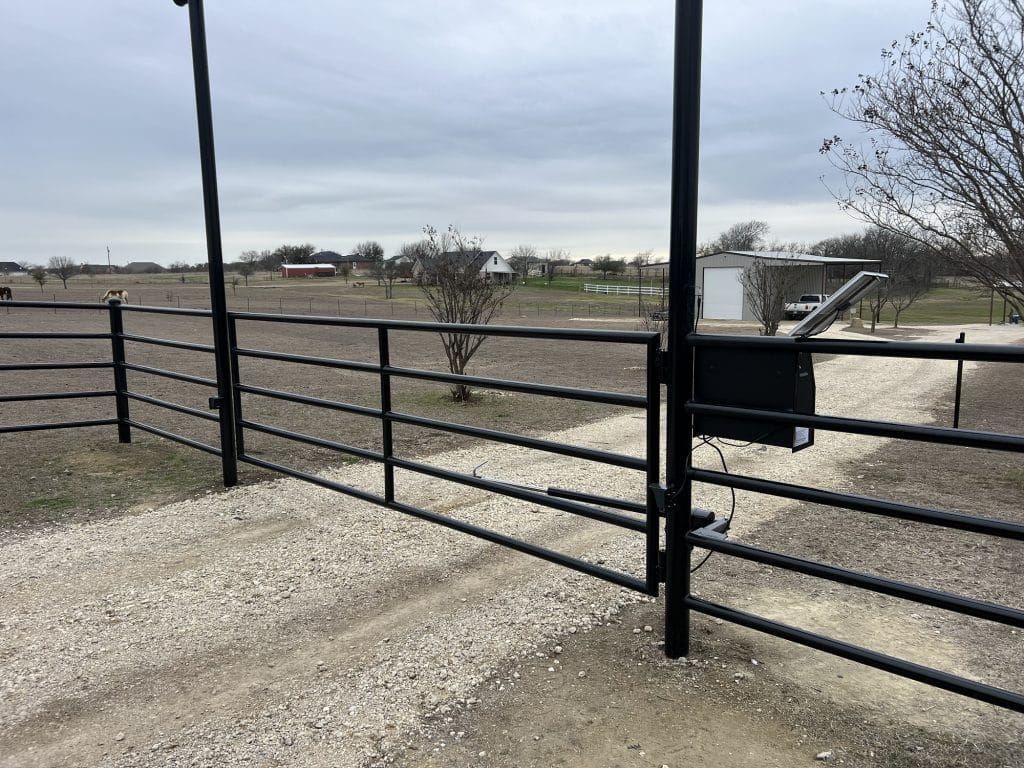
Fabrication becomes part of gate repair when the gate’s structure cannot be restored through adjustments alone. Here are the most common signs, along with what they often mean.
The Gate Is Sagging Or No Longer Level
Sagging typically shows up as:
- One side sitting lower than the other
- Scraping at the bottom
- Rubbing against posts or guides
- The latch no longer lines up cleanly
Sag is not only an appearance issue. It changes how weight is carried. That extra load creates friction and makes the opener work harder. Over time, that strain can lead to repeated operator issues and a gate that feels “weaker” each month.
Sag can come from:
- Hinge wear
- Mounting plate bending
- Frame flex due to limited bracing
- Post movement
- Cracked welds near hinge areas
Because automated gate safety depends on both the operator and the gate structure, it helps to understand how UL 325 is used to certify gate operators and systems.
The Gate Scrapes Or Drags During Movement
Scraping can happen on swing gates when the ground shifts or the hinges wear. It can happen on slide gates when track alignment changes, rollers wear, or the frame twists.
If scraping is consistent, fabrication may be needed to correct:
- Frame twist
- Roller mount misalignment
- Weak guide brackets
- The gate leaf flexes under its own weight
- Hinge or post alignment problems that keep returning
Cracked Welds Or Visible Metal Fatigue
Welds are strong, but they are not invincible. Repeated movement, wind load, and vibration can cause cracks over time, especially on larger gates or gates with heavy panels.
Cracked welds commonly appear near:
- hinge areas
- corners of the frame
- latch points
- brace connections
- operator mounting plates
Bent Frame Or Impact Damage
A gate that has been hit by a vehicle, forced by a struggling operator, or pushed by heavy wind can bend. Even a small bend can cause:
- uneven travel
- guide rubbing
- latch misalignment
- resistance in one section of the path
Rust Damage That Weakens The Structure
Rust is more than cosmetic when it reaches load-bearing sections. Rust can thin metal and weaken joints. If a gate has rust-through at a brace, corner, or hinge area, fabrication is often required to remove weakened metal and rebuild strength.
If you see bubbling paint, flaking metal, or soft spots near joints, it is worth inspecting early. Waiting can lead to more extensive metal replacement later.
Why Fabrication Problems Often Show Up As Opener Problems
Homeowners often say, “The opener is broken.” But many opener symptoms are caused by the gate itself.
Here is the chain reaction that commonly happens:
- A hinge wears, or a frame starts to sag.
- The gate begins rubbing or binding slightly.
- The operator now works harder each cycle.
- The system starts moving more slowly, noisier, or less consistently.
- Sensors detect vibration, or the operator senses overload and reverses.
- The homeowner tries it multiple times, increasing strain.
- Now the opener truly may fail, but the root problem was structural.
That is why a complete repair approach checks the gate structure first, then the operator, then the accessories.
To understand how automatic gates work, it helps to know they rely on electric motors, control boards, and remote inputs, so when a gate binds or drags due to structural resistance, the system can strain and become less reliable.
Common Fabrication Repairs That Restore Smooth Travel
Slide gates depend on consistent alignment. Small shifts can cause big friction changes. That is why fabrication is common in slide gate repairs.
Track And Guide Alignment Issues
A slide gate can start rubbing if:
- The track shifts slightly
- Guide rollers move out of position
- Brackets loosen over time
- The gate frame flexes and changes its shape during travel
Fabrication may be needed to rebuild or reinforce:
- Guide roller brackets
- Support posts
- Track mounting points
- Frame bracing so the gate stays stiff
A key idea is this: you can adjust guides, but if the mounting points are bending or pulling, the adjustment will not hold.
Roller Mount Failures
Rollers carry the load. When roller mounts bend or crack, the gate can drop slightly or wobble. That can create:
- Scraping
- Shaking during travel
- Sudden stops or reversals
- Chain or rack misalignment
Chain Or Rack Alignment Problems Tied To Structure
A chain or rack system can go out of alignment if the gate frame shifts. You can realign a rack, but if the frame is flexing, it will drift again.
Fabrication helps by restoring correct geometry so adjustments last and the drive system stays aligned through full cycles.
When Fabrication Becomes The Difference Between “Works” And “Safe”
Swing gates can look simpler, but they can develop serious structural issues that affect safety. When a swing gate sags or binds, it can create pinch risks and unpredictable movement.
Hinge Wear And Mounting Point Damage
Hinges carry a constant load. If a hinge mount starts pulling, bending, or cracking, it can cause:
- Sag
- Binding during swing
- Latch misalignment
- Hardware loosening over time
Post Movement And Reinforcement Needs
Posts can shift due to soil movement, drainage changes, or age. When posts shift:
- The gate stops lining up at the latch
- The swing arc changes
- The gate may scrape the ground in one spot
- The operator arms can bind or push unevenly
Gate Leaf Flex And Bracing Problems
Large swing gates can flex, especially if they are wide, tall, or have heavy decorative infill. If the gate leaf flexes, it can:
- Stress hinges
- Misalign latch points
- Create resistance, the operator “feels” an overload
- Cause inconsistent closing pressure
When Fabrication Is A Better Option Than “Just Adjusting It”
Many homeowners ask, “Can’t you just adjust it?” Sometimes, yes. But fabrication becomes the better option when the gate cannot hold alignment.
Adjustments may be enough when:
- The frame is still solid and stiff
- Hardware is worn, but the mounts are intact
- Alignment is only slightly off
- There are no cracked welds or bending points
Fabrication is more likely when:
- Alignment keeps drifting back
- Welds are cracked or separating
- The frame is bent, twisted, or flexed
- Mounts are damaged or pulling away
- Rust has weakened key load-bearing areas
How Fabrication Connects To Safety And Reliable Operation
Gate fabrication is not only about making the gate “look straight.” It is about making the operation safe and consistent.
Structural stability matters for safety because:
- Safety sensors work better when travel is consistent. If the gate shakes or flexes, sensors may misread.
- Force settings stay correct when resistance stays consistent. If resistance changes, the force may be wrong for safe operation.
- Stable movement reduces pinch and crush risks. A gate that jerks or slams creates more risk.
- Secure closure improves security. A gate that does not align at the latch can leave gaps or fail to close fully.
This is also why routine care matters. If you want a clear schedule that helps catch structural issues early, read How Often Should Automatic Gate Maintenance Be Done?.
What A Fabrication-Included Repair Visit Usually Looks Like
When fabrication is part of gate repair, the process is usually more structured than a basic adjustment visit. The goal is not only to “get it moving,” but to restore stable movement that will stay reliable.
Full Inspection And Root Cause Identification
A technician should confirm:
- Where the gate binds, scrapes, or rubs
- Whether the frame is square and level
- Whether hinge points or roller mounts are failing
- How the operator reacts to resistance
- Whether sensors are being triggered by vibration or misalignment
Plan The Structural Correction
A proper plan might include:
- Strengthening corners that flex
- Rebuilding hinge mounts
- Replacing rusted or cracked sections
- Adding bracing to reduce sag and twist
- Correcting operator mounting points
Perform Fabrication And Reinforcement
Fabrication work can include cutting, welding, adding plates, rebuilding mounts, or reworking bracing. The goal is a structure that carries weight correctly and stays consistent through cycles.
Re-Align And Re-Test The Whole System
After structural work, the system should be:
- Aligned for smooth travel
- Checked for resistance through the full path
- Cycled multiple times
- Safety tested for correct response
- Confirmed for secure closure
How To Spot Early Structural Problems Before They Get Bigger
You do not need to diagnose fabrication needs yourself, but you can spot early warning signs that suggest a structural inspection is worth scheduling.
Watch for:
- The gap between the gate and the post changes over time
- The gate is leaning slightly more each month
- Paint cracking near welds or joints
- New rattling sounds when the gate starts moving
- Visible flex in the gate when it begins closing
- The latch contact is becoming inconsistent
- Rollers or guides that look tilted instead of straight
A Stronger Gate Means A Smoother Repair That Lasts
When a gate is sagging, scraping, cracking at welds, or refusing to stay aligned, fabrication may be the missing piece that makes repairs actually last. A stable, reinforced gate protects the operator, improves safety device performance, and helps your gate close securely the way it should.
Tcamm Door & Gate helps homeowners and property owners in Aledo, TX, inspect structural issues, complete fabrication when needed, and restore smooth gate movement with a repair plan built for long-term reliability. Contact us or give us a call.
Frequently Asked Questions
Can a bent gate still be repaired?
Often, yes. The repair depends on where the bend is and whether the metal is compromised. Reinforcement may be needed.
Why does fabrication matter if the opener is the part that “moves” the gate?
Because the opener relies on the gate moving smoothly. If the gate binds or flexes, the opener strains and fails more often.
Is a sagging gate always a fabrication problem?
Not always. Sometimes, hinge adjustment or hardware replacement solves it. If mounts are damaged or the frame is weak, fabrication may be required.
What if my gate scrapes only sometimes?
Intermittent scraping can mean the gate is flexing, the ground is shifting, or the mounts are loose. It is a sign worth inspecting early.
Can fabrication help with security issues?
Yes. A gate that does not align at the latch point can leave gaps. Fabrication can restore proper closure and alignment.
Does fabrication include painting?
Not always. Some repairs include finish work, and some do not. The main goal is restoring strength and smooth operation.
How do I prevent fabrication-level issues?
Regular maintenance helps catch sagging, loose brackets, and early cracks before they grow.
What kinds of gates need fabrication repairs most often?
Large, heavy gates and gates exposed to high wind loads often need reinforcement over time, especially if the original bracing was limited.
Is fabrication safe to do on-site?
Yes, when handled by trained professionals with correct safety procedures. The gate must also be tested carefully after work is done.